
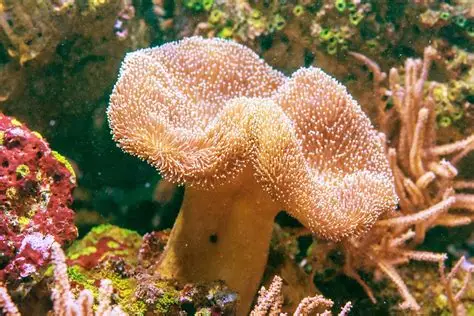
| Difficulty | Easy |
| Time Required | 15–20 minutes |
| Healing Time | 1–3 weeks |
| Best Method | Cut a wedge, band it to rubble |
| Coral Type | Toadstools, finger and colt-type leathers |
Overview
Leathers are nearly impossible to kill by fragging — a toadstool will regrow its whole crown from a stump — but they fight back with slime. Fresh leather cuts pour mucus and toxins into the water, so run carbon and plan a water change. And because that slimy tissue rejects super glue, the trick is mechanical attachment: rubber bands, mesh, or a toothpick instead of glue.
What You’ll Need
- Sharp scissors or scalpel
- Rubber bands + rubble/plug, plastic mesh, or toothpicks
- Iodine dip (leathers respond very well to Lugol’s after cutting)
- Fresh carbon in the reactor or a media bag
Step-by-Step
- Cut a wedge or strip from the cap edge (toadstool) or snip a whole finger/branch (finger and colt leathers). Pieces an inch or two across are ideal.
- Iodine-dip the frag and, briefly, the parent’s cut edge.
- Attach mechanically: rubber-band the piece snugly (not tight) to a plug or rubble chip, pin it with a toothpick through the edge into a plug hole, or lay it on rubble under mesh.
- Place in gentle flow. In one to three weeks the frag grips its base; remove the band or mesh once attached.
Aftercare & Healing
Both parent and frag will slime heavily and may stay shriveled and polyps-in for up to two weeks — this is normal leather sulking, not death. Run carbon and keep flow moving so mucus sheds. The parent’s cut edge rounds over and often branches into a fuller shape than before.
What Can Go Wrong
Frag rotting under the rubber band: banded too tight — snug is enough. Neighboring corals sulking: leather chemical warfare (terpenes); more carbon, bigger water change. Parent closed for weeks: patience — toadstools famously take their time, then shed a waxy layer and reopen better than ever.
Related Care Guides
Toadstool Leather Coral · Finger Leather · Devils Hand Leather · Colt Coral · Yellow Leather · Cabbage Leather