
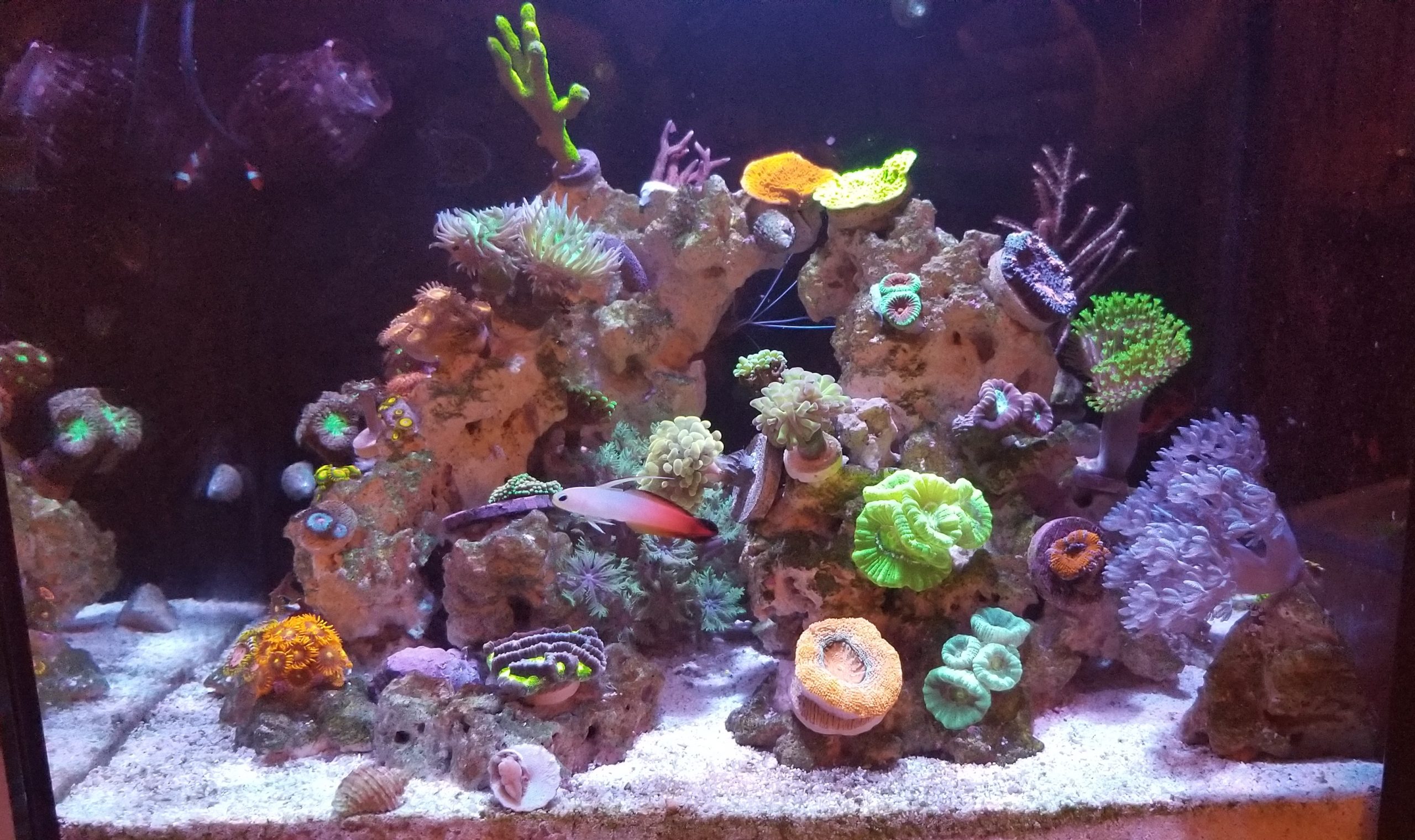
| Good Starter Size | 20–40 gallons (bigger = more stable) |
| Core Gear | Tank, light, heater, flow, salt, RODI |
| Test Kit | Ammonia, nitrite, nitrate, salinity |
| First Step | Patience — cycle before stocking |
| Golden Rule | Bigger water volume is easier, not harder |
Overview
Starting a saltwater tank is far more achievable than the hobby’s reputation suggests — if you buy the right basics and, above all, go slow. The single biggest predictor of success isn’t money spent; it’s patience. This is your shopping-and-mindset checklist before livestock ever enters the picture.
What You Actually Need
- A tank — counterintuitively, bigger is easier: more water dilutes mistakes. 20–40 gallons is a forgiving start; nano tanks swing faster.
- Light suited to what you’ll keep (fish-only needs little; corals need real reef lighting).
- Heater (ideally with a controller) and flow (a powerhead or two).
- Salt mix + RODI water, a refractometer, and a test kit (ammonia/nitrite/nitrate).
- Live rock and sand to build the biological filter.
The Order of Operations
- Set up hardware, mix saltwater to 1.025, get temperature stable.
- Cycle the tank — weeks, not days — before any livestock.
- Add a small clean-up crew, then your first hardy fish, slowly.
- Decide fish-only or reef early, since it shapes lighting and budget.
Common Mistakes
Going too small “to start cheap”: nano tanks are less forgiving — a bigger tank is an easier tank. Rushing livestock: the #1 beginner mistake; the tank isn’t ready for weeks. Skipping RODI and a test kit: the two cheapest ways to avoid the most common early problems. See common beginner mistakes.
Related Guides
How to Cycle a New Saltwater Aquarium · Why You Need a Quarantine Tank · Building a Clean-Up Crew · Fish-Only vs Reef Tank: Which Should You Start With?
Frequently Asked Questions
What do I really need to start a saltwater tank?
A tank, quality salt and RODI water, a heater, powerheads for flow, a light suited to what you will keep, live rock, a test kit and a refractometer. A skimmer and sump are helpful but optional to start.
What size tank is best for a beginner?
Bigger is actually more forgiving, since more water volume means slower, smaller swings in temperature and chemistry. A common sweet spot is around 40 to 75 gallons; very small nano tanks are less stable and harder for a first tank.
How much does a saltwater tank cost to start?
It varies widely, but budget for the tank plus equipment (heater, flow, light, RODI, test kits) and ongoing costs like salt, livestock and replacement media. Buying quality equipment once is cheaper than replacing bargain gear.