
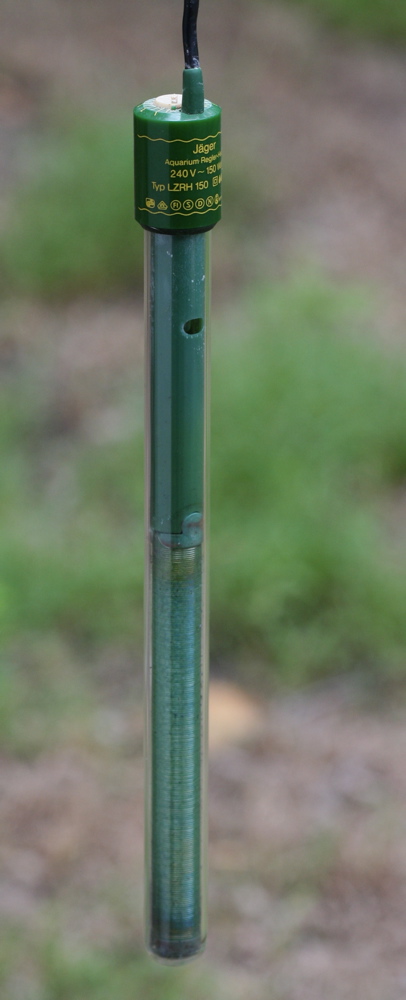
| What It Does | Holds a stable reef temperature |
| Reef Target | 76–78°F (stable) |
| Best Practice | Use a separate controller |
| Redundancy | Two smaller heaters > one big |
| Golden Rule | Stability over the exact number |
Overview
Reef animals come from remarkably stable-temperature water, so the heater’s job is less about being warm and more about being steady. A swinging temperature stresses fish (and stress invites ich) and corals alike. The two failure modes to guard against are a heater that dies (tank goes cold) and, far worse, one that sticks ON and cooks the tank — which is why redundancy and an external controller matter.
Target & Stability
Most reefers hold 76–78°F. The exact number matters less than keeping it stable — a rock-steady 77°F beats a tank drifting between 75 and 81. Corals and fish adapt to a consistent temperature; it’s the swings that harm them.
Setting It Up
- Size the heater to the tank (rough guide ~3–5 watts/gallon), and place it in high flow so heat distributes.
- Use a separate temperature controller — it overrides the heater’s built-in thermostat, so a stuck heater can’t cook the tank.
- Consider two smaller heaters instead of one large: if one fails off, the other holds; if one sticks on, it’s too small to overheat everything.
- Verify with an independent thermometer — don’t trust the heater’s dial alone.
Common Mistakes
Trusting a heater’s built-in thermostat alone: a stuck-on heater is a classic tank-wipeout — add a controller. One oversized heater: if it sticks on, it can cook the tank fast. Chasing a “perfect” temp: stability beats the exact degree.
Related Guides
Marine Ich (White Spot Disease): Identify & Treat
Frequently Asked Questions
What temperature should a reef tank be?
Around 76 to 78 degrees, held stable. The exact number matters less than avoiding swings, since rapid temperature changes stress fish and corals more than a steady temperature at the edge of the range.
Should I use two heaters?
Yes. Two smaller heaters that together meet your wattage give redundancy. If one sticks off you still have heat, and a smaller unit is less likely to cook the tank if it sticks on. Pair them with a controller for safety.
How big a heater do I need?
Roughly 3 to 5 watts per gallon depending on room temperature. Splitting that across two heaters on a temperature controller is safer than one large heater.