
Overview
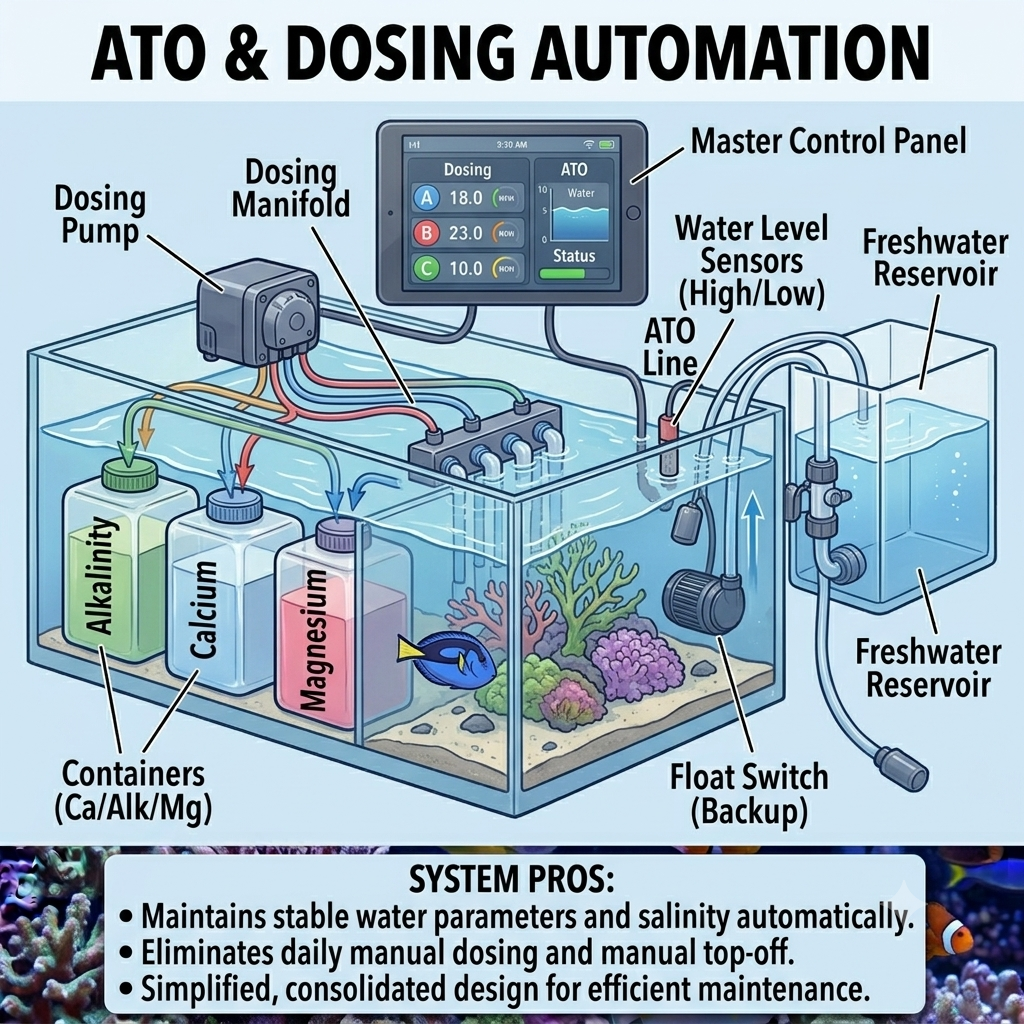
Two of the most worthwhile pieces of automation in a reef are an auto top-off (ATO) and a dosing pump. An ATO replaces evaporated water automatically to keep salinity stable; dosing pumps add supplements on a schedule so parameters stay steady without daily hand-dosing. Together they remove the two most tedious daily chores and make the tank more stable.
How an ATO Works
As water evaporates, salinity rises, because salt doesn’t evaporate. An ATO senses the dropping water level and pumps in fresh RODI to top it back up, keeping salinity rock-steady. A good ATO uses a reliable optical or float sensor plus a backup failsafe so it can’t overflow or run dry.
How Dosing Pumps Work
A dosing pump is a precise peristaltic pump that adds a set amount of a supplement, two-part calcium and alkalinity, trace elements, or a carbon source, at scheduled times. Instead of pouring a daily dose by hand, the pump spreads small amounts throughout the day, which is gentler on parameters and never forgotten.
Why They Help
Stability is everything in a reef, and the biggest instability usually comes from human inconsistency: a missed dose, a busy weekend, evaporation swinging salinity. Automating top-off and dosing keeps the key parameters steady around the clock, which corals reward with better growth and color. It also makes it far easier to leave the tank for a few days.
Cautions
Automation only fails safe if you set it up that way. Always use an ATO with a redundant sensor or failsafe, keep the reservoir on fresh RODI (never saltwater), and don’t oversize the reservoir beyond what a failure could safely dump. For dosing, calibrate the pumps, don’t dose calcium and alkalinity at the same minute or through the same line, and re-check your dose as coral demand grows. Trust automation, but verify it with regular testing.
Frequently Asked Questions
What does an auto top-off (ATO) do?
It automatically replaces evaporated water with fresh RODI to keep your salinity stable. Since salt doesn’t evaporate, topping off with fresh water prevents the salinity creep that stresses corals and inverts.
Do I need a dosing pump?
Not required, but very helpful once corals are consuming noticeable calcium and alkalinity. A dosing pump adds supplements in small scheduled amounts, keeping parameters steadier than hand-dosing and removing a daily chore.
Can an ATO overflow my tank?
Only if it is set up without a failsafe. A reliable ATO uses a backup sensor or float so a stuck pump can’t keep running. Always use redundancy, keep the reservoir sized sensibly, and fill it only with fresh RODI.
Why should I automate top-off and dosing?
Stability. The biggest source of parameter swings is human inconsistency, missed doses and evaporation. Automating these keeps salinity, calcium, and alkalinity steady around the clock, which improves coral health and lets you leave the tank safely for a few days.