
| What It Does | Circulates water; delivers food & O2 |
| Provided By | Powerheads / wavemakers, return pump |
| Soft/LPS | Low to moderate, indirect |
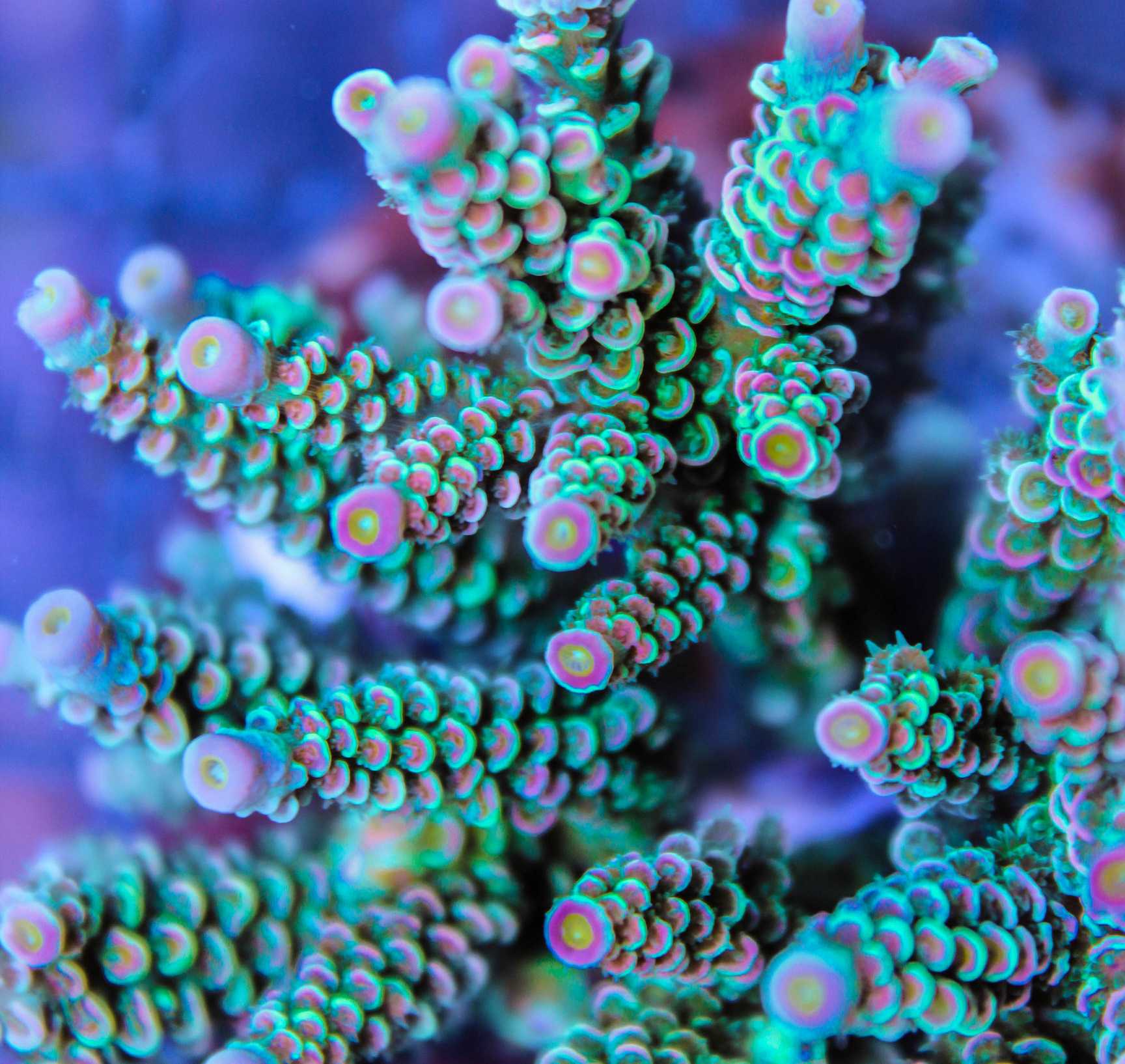
| SPS | High, turbulent, varied |
| Golden Rule | Random turbulence beats a laminar jet |
Overview
Flow is the invisible half of a healthy reef. Moving water delivers food and oxygen to corals, carries waste away, keeps detritus from settling, and prevents dead spots where cyano and detritus accumulate. Different corals want different amounts, but they all prefer turbulent, varied flow over a single blasting jet.
How Much, and What Kind
Softies and LPS like gentle-to-moderate, indirect flow — a hammer or a leather shredded by a direct powerhead is unhappy. SPS want strong, turbulent flow that keeps their branches clean and fed. Aim flow to bounce off glass and rock so it swirls, rather than pointing a powerhead straight at corals. Alternating or wave-making flow mimics the reef and keeps everything gently rocking.
Setting It Up
- Use powerheads/wavemakers plus your return pump; total turnover of roughly 20–40x tank volume/hour is a common reef range (more for SPS).
- Position pumps to create turbulence — cross-flow, or aimed at the surface and rock, not directly into corals.
- Watch for dead spots (settling detritus, cyano film) and add/re-aim flow there.
- Keep some surface agitation — it drives gas exchange and oxygen.
Common Mistakes
One powerhead blasting one spot: creates a sandstorm and a dead zone elsewhere — spread and vary flow. Too much direct flow on softies/LPS: they stay closed and stressed. Ignoring dead spots: that’s where nuisance films start — see our SPS care for high-flow corals.
Related Guides
Acropora · How to Frag Acropora and Other Branching SPS
Frequently Asked Questions
How much flow does a reef tank need?
A common target is roughly 20 to 40 times tank volume per hour in total turnover, but placement matters more than the raw number. You want random, turbulent flow with no dead spots, not a fire hose.
Why is water flow important?
Flow carries food to corals, removes their waste, keeps detritus suspended for export, and boosts oxygen and gas exchange. Poor flow leads to detritus buildup, cyano and unhealthy corals.
Where should I point my powerheads?
Aim them to cross the tank and glance off the glass to create random turbulence, not straight at corals. Alternating or wave-making flow prevents dead spots better than steady one-direction current.