
| What It Powers | Coral photosynthesis (zooxanthellae) |
| Measured In | PAR (usable light) & spectrum |
| Soft/LPS PAR | ~50–150 |
| SPS PAR | ~150–350+ |
| Golden Rule | Acclimate corals to light slowly |
Overview
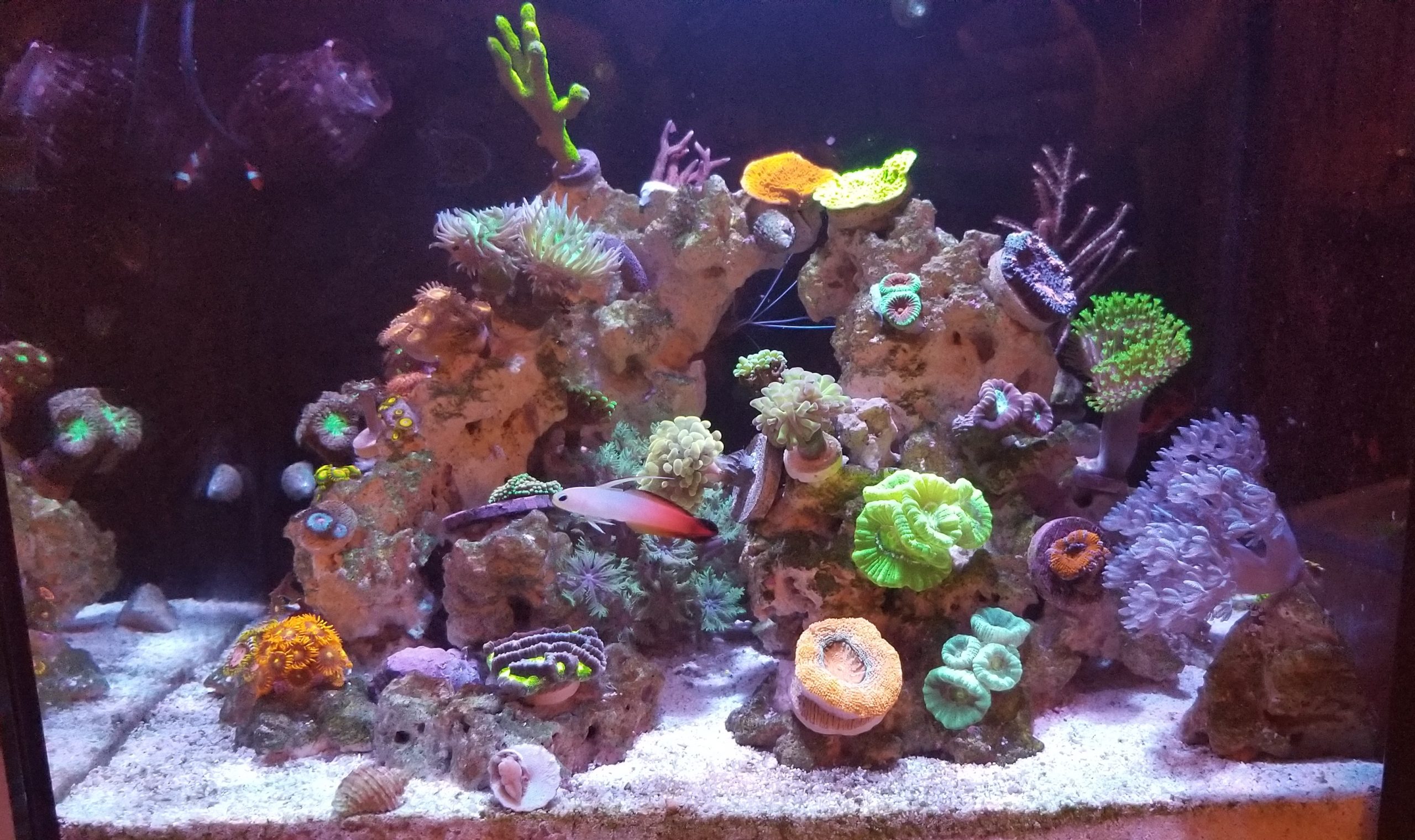
Corals are photosynthetic — they host algae (zooxanthellae) that feed them using light — so lighting isn’t decoration, it’s life support. The two things that matter are intensity (measured as PAR, the usable light corals actually photosynthesize with) and spectrum (the blue-heavy mix reef corals evolved under). Get those right for the corals you keep and you’re most of the way to good growth and color.
PAR: How Much Light
PAR (Photosynthetically Active Radiation) is what corals use; watts and lumens are not. Rough targets: softies and LPS thrive around 50–150 PAR, SPS want ~150–350+. Light is strongest at the top of the tank and falls off with depth, so a coral’s placement matters as much as the fixture. A PAR meter (or borrowing one) takes the guesswork out.
Choosing & Using Lights
- LED, T5, and hybrid fixtures all grow coral — match output to your tank depth and the corals you want.
- Run a reef-appropriate spectrum (lots of blue); it drives coral color and looks the part.
- Set a photoperiod of roughly 8–10 hours with gentle ramp up/down.
- Acclimate new corals to light — start them lower/dimmer and raise over weeks; too much too fast bleaches them.
Common Mistakes
Buying by watts/lumens: PAR is the metric that matters for corals. Blasting a new frag at full intensity: the fast track to a bleached coral — acclimate. Too-long photoperiod: more hours mainly feeds algae, not corals — intensity and spectrum beat duration. See our SPS and coral care guides for per-coral light needs.
Related Guides
Frequently Asked Questions
What is PAR and why does it matter?
PAR, Photosynthetically Active Radiation, measures the light corals can actually use. Too little starves their zooxanthellae and too much bleaches them, so PAR guides where each coral is placed.
What PAR do corals need?
Roughly: softies and LPS 50 to 150, SPS 150 to 350 and up. Acclimate corals to brighter light gradually. A PAR meter takes the guesswork out of placement.
How long should reef lights be on?
Commonly 8 to 10 hours of full daylight with ramp-up and ramp-down periods. Longer photoperiods do not replace intensity and can feed algae, so consistency matters more than length.