
Overview
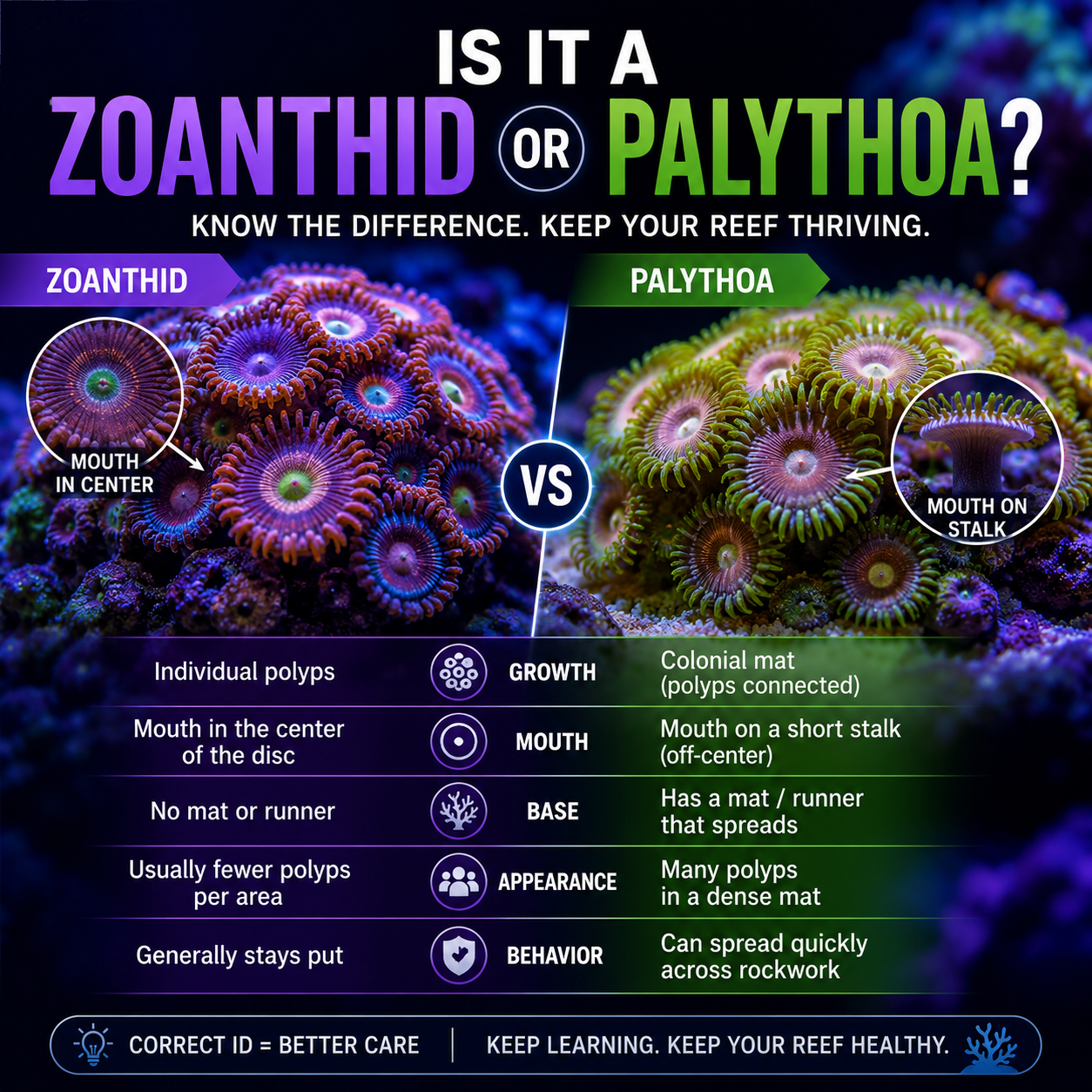
Zoanthids (“zoas”) and palythoas (“palys”) are closely related colonial polyps that the hobby usually lumps together, and telling them apart can be genuinely tricky. There are, however, some practical differences in size, structure, and — importantly — palytoxin risk. This guide covers the useful tells.
Polyp Size
The quickest rule of thumb is size: zoanthids tend to have smaller polyps, often dime-sized or less, while palythoas tend to have larger polyps, sometimes considerably bigger. It is not foolproof — there is overlap — but a colony of big, tall polyps is more likely a paly, and a carpet of small, neat polyps is more likely a zoa.
The Mat (Coenenchyme)
Look at the tissue connecting the polyps. Palythoas typically have a thicker, fleshier mat that often incorporates sand and debris into itself, giving it a gritty, textured feel and look. Zoanthids usually have a thinner, cleaner mat and connect via more delicate stolons. If the base tissue is chunky and full of embedded grit, lean paly.
Polyp Detail
Up close, palys often look a little coarser — a frillier fringe of tentacles and a heavier body — while zoas tend to look neater and more jewel-like, which is part of why zoas dominate the designer-morph market. These are soft tells, though, and lighting and color can easily fool you.
Why It Matters: Palytoxin
Beyond looks, the practical reason to care is safety. Both zoas and palys can contain palytoxin, but palythoas are the group the toxin is literally named after and are often considered the higher-risk. The honest takeaway: do not rely on your ID to decide how carefully to handle them — treat both as potentially toxic and use gloves, eye protection, and no-heat handling every time. See our palytoxin safety guide for the full picture.
An Honest Caveat
Hobby labels are loose. Corals sold as “zoas” and “palys” do not always line up with the actual genera (Zoanthus, Palythoa, Protopalythoa), and even experts disagree on some pieces. For husbandry it rarely matters — care is nearly identical — and for safety you should assume toxicity either way.
Related Guides
Frequently Asked Questions
What is the main difference between zoanthids and palythoas?
The handiest tell is polyp size — zoanthids usually have smaller polyps, palythoas larger — and the mat: palythoas often have a thick, gritty mat that incorporates sand, while zoanthids have a cleaner, thinner one. There is overlap, so no single feature is definitive.
Are palythoas more toxic than zoanthids?
Both can contain palytoxin, and palythoas — the group the toxin is named for — are often considered higher-risk. But toxicity varies colony to colony and you cannot judge it by sight, so treat both zoas and palys as potentially toxic and handle them with gloves, eye protection, and no heat.
Can I always tell zoas and palys apart for sure?
Often not. Hobby names are used loosely and do not always match the actual genera, and even experienced reefers disagree on some pieces. Care is nearly identical either way, and for safety you should assume both are toxic.