
Overview
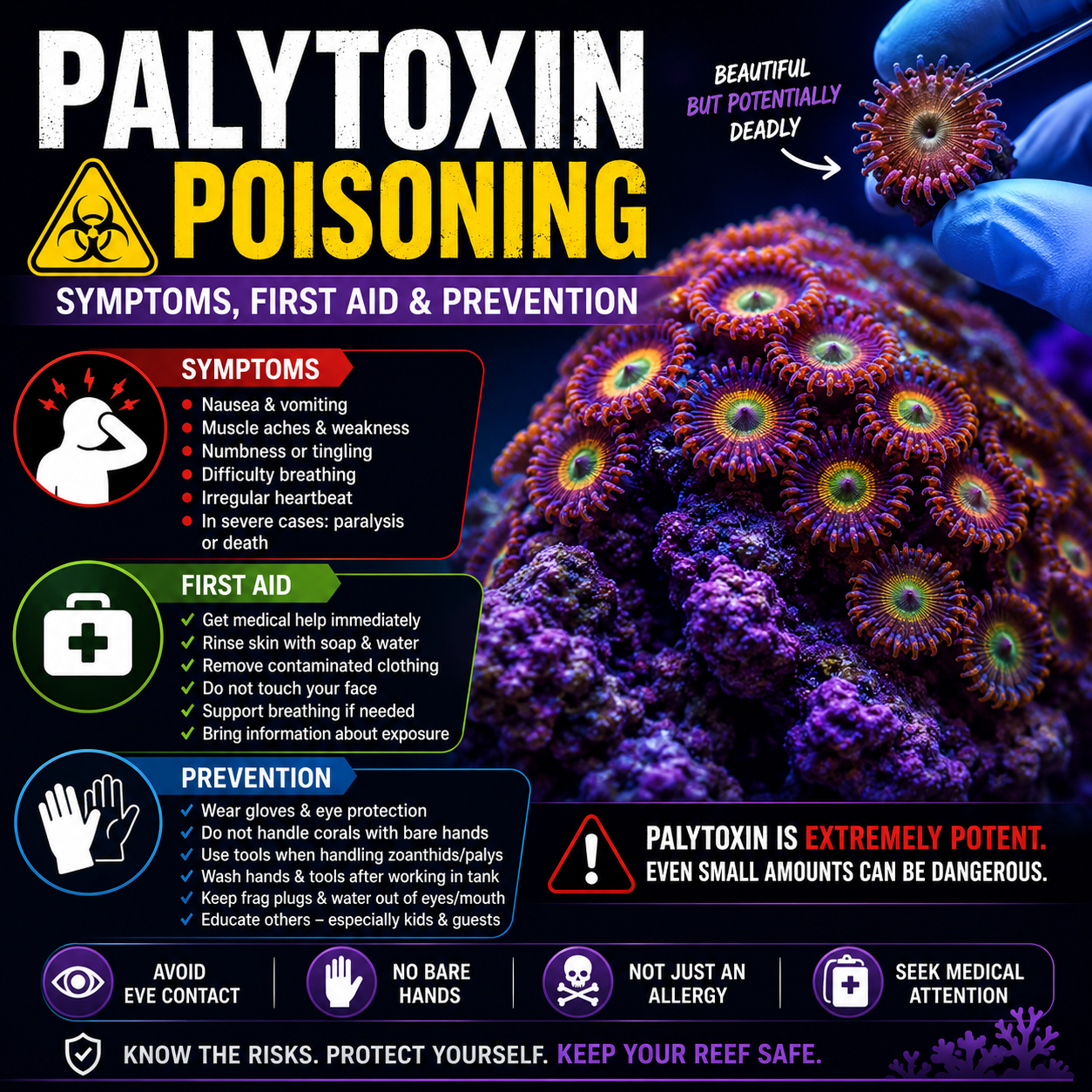
Palytoxin is one of the most potent non-protein toxins known, and it is present in many zoanthids and — especially — palythoas that reef hobbyists keep. Aquarists have genuinely been hospitalized after handling or cleaning these corals, so this is a real, documented hazard worth taking seriously. This guide covers how exposure happens, what the symptoms look like, basic first aid, and, most importantly, how to prevent it.
n
This is general safety information, not medical advice. If you suspect palytoxin exposure, contact Poison Control or emergency services immediately.
How Exposure Happens
The most dangerous mistake is applying heat to rock with palys or zoas on it — boiling, baking, or hot-scrubbing rock to clean it can aerosolize palytoxin into steam and airborne droplets, and people have been seriously poisoned just cleaning rock in a closed room. Toxin can also enter through cuts or broken skin while handling or fragging, and splashes can affect the eyes. You do not have to eat it to be harmed — inhalation and skin/eye contact are the real-world routes.
Symptoms
Symptoms can appear within minutes to hours and vary with the route and dose. Inhalation commonly causes coughing, chest tightness, and difficulty breathing, often with flu-like fever, chills, and body aches (this cluster is sometimes mistaken for a bad flu). Other reported effects include nausea, numbness or tingling, a metallic taste, and eye irritation or vision problems from splashes. Severe exposures can affect the heart and nervous system and are a medical emergency.
First Aid & What to Do
Treat any significant exposure as urgent. Get to fresh air immediately if you have inhaled fumes, flush skin or eyes with clean water for several minutes after contact, and remove contaminated clothing. Then seek professional help — call Poison Control or emergency services, and specifically tell them it is palytoxin from aquarium corals, since many clinicians are not familiar with it. Do not wait to “see if it passes,” especially with breathing symptoms. Again, this is not a substitute for professional medical care.
Prevention (the important part)
Almost every serious case is preventable:
- Never boil, bake, or hot-scrub rock that has (or had) zoas or palys on it. This is the single biggest cause of hospitalizations.
- Wear gloves and eye protection whenever handling, fragging, or removing palys or zoas.
- Work in a well-ventilated area, and keep children and pets away.
- Remove unwanted colonies physically while submerged, not by scraping dry rock.
- Wash your hands and tools afterward, and never touch your face or eyes mid-task.
Cautions
Palytoxin content varies a lot between colonies — some carry very little, some a dangerous amount — and you cannot tell by looking. Treat all zoanthids and palythoas as potentially toxic and handle them with the precautions above every time. When in doubt, err on the side of caution and get medical advice.
Related Guides
- Zoanthids vs. Palythoas: How to Tell Them Apart
- How to Frag Zoanthids & Palythoas
- Setting Up a Quarantine Tank
Frequently Asked Questions
Can you get sick just from touching zoanthids or palythoas?
Yes, it is possible — palytoxin can enter through cuts or broken skin, and splashes can affect the eyes. But the most dangerous route by far is inhaling aerosolized toxin when rock is boiled, baked, or hot-scrubbed. Always wear gloves and eye protection and never apply heat to rock with palys on it.
What are the symptoms of palytoxin poisoning?
Commonly coughing, chest tightness, and difficulty breathing (from inhalation), along with flu-like fever, chills, and body aches, plus possible nausea, numbness, or eye irritation. Symptoms can be delayed by hours, and severe cases affect the heart and nervous system and are a medical emergency.
How do I safely remove palythoas from my live rock?
Never boil or dry-scrub the rock, which aerosolizes the toxin. Instead wear gloves and eye protection, work in a ventilated area, and remove the colony physically while it is submerged. If you suspect any exposure, seek medical help and mention palytoxin specifically.