
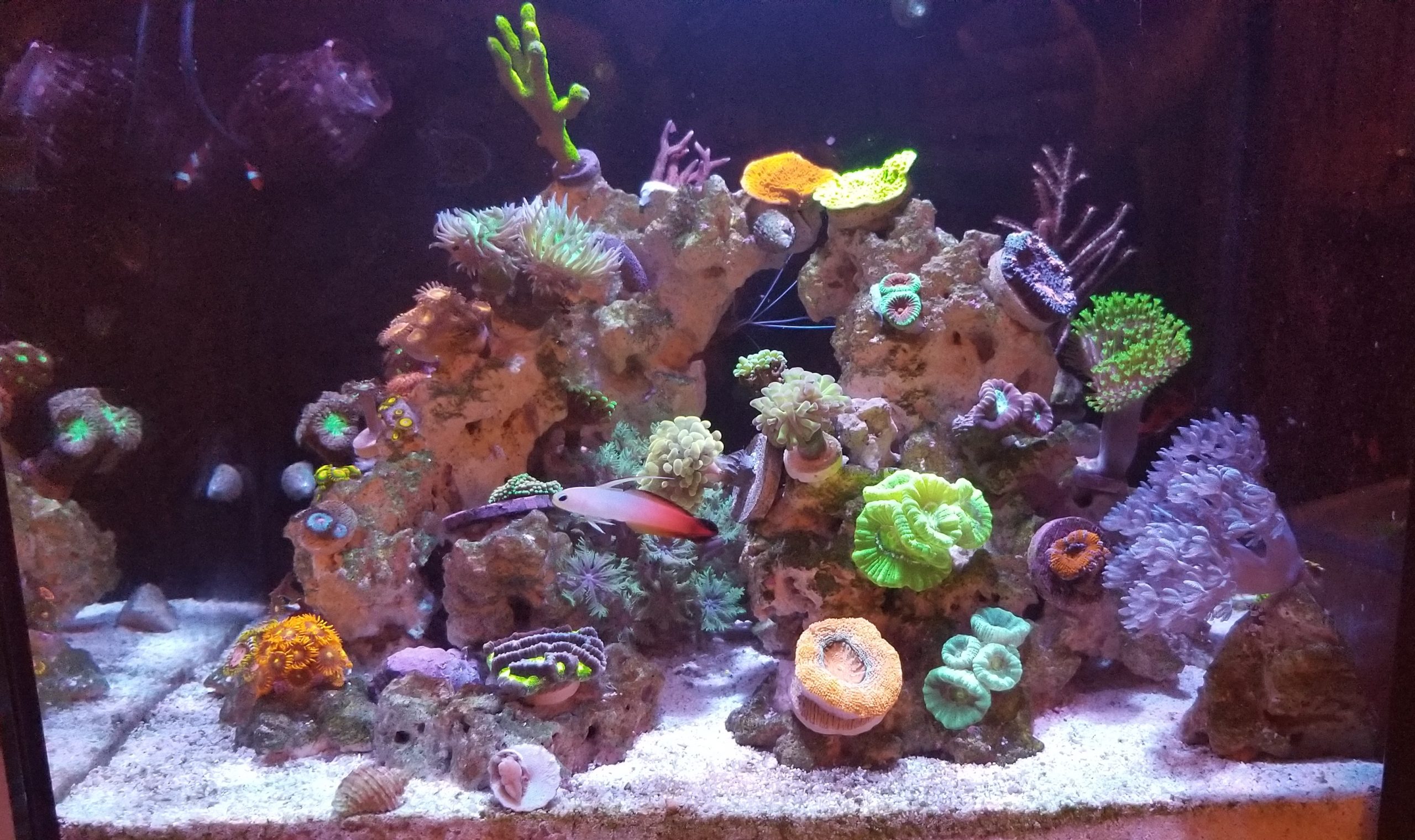
| Good Starter Size | 20–40 gallons (bigger = more stable) |
| Core Gear | Tank, light, heater, flow, salt, RODI |
| Test Kit | Ammonia, nitrite, nitrate, salinity |
| First Step | Patience — cycle before stocking |
| Golden Rule | Bigger water volume is easier, not harder |
Overview
Starting a saltwater tank is far more achievable than the hobby’s reputation suggests — if you buy the right basics and, above all, go slow. The single biggest predictor of success isn’t money spent; it’s patience. This is your shopping-and-mindset checklist before livestock ever enters the picture.
What You Actually Need
- n
- A tank — counterintuitively, bigger is easier: more water dilutes mistakes. 20–40 gallons is a forgiving start; nano tanks swing faster.
- Light suited to what you’ll keep (fish-only needs little; corals need real reef lighting).
- Heater (ideally with a controller) and flow (a powerhead or two).
- Salt mix + RODI water, a refractometer, and a test kit (ammonia/nitrite/nitrate).
- Live rock and sand to build the biological filter.
n
n
n
n
n
The Order of Operations
- n
- Set up hardware, mix saltwater to 1.025, get temperature stable.
- Cycle the tank — weeks, not days — before any livestock.
- Add a small clean-up crew, then your first hardy fish, slowly.
- Decide fish-only or reef early, since it shapes lighting and budget.
n
n
n
n
Common Mistakes
Going too small “to start cheap”: nano tanks are less forgiving — a bigger tank is an easier tank. Rushing livestock: the #1 beginner mistake; the tank isn’t ready for weeks. Skipping RODI and a test kit: the two cheapest ways to avoid the most common early problems. See common beginner mistakes.
Related Guides
How to Cycle a New Saltwater Aquarium · Why You Need a Quarantine Tank · Building a Clean-Up Crew · Fish-Only vs Reef Tank: Which Should You Start With?