
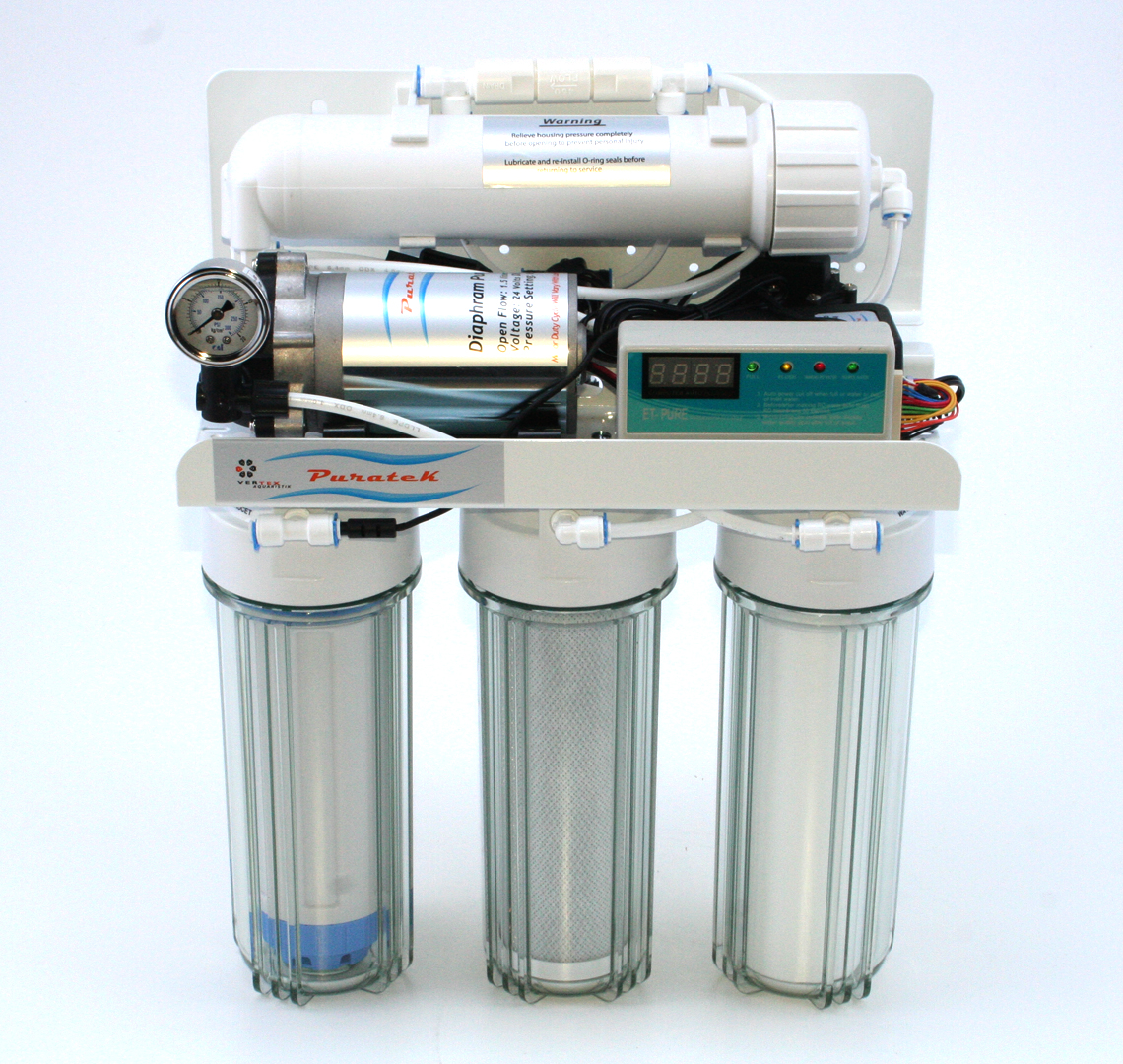
| What It Is | Reverse-osmosis / deionized pure water |
| Target TDS | 0 ppm out of the unit |
| Used For | Mixing salt & topping off evaporation |
| Fixes | Algae, cyano, unexplained pests |
| Golden Rule | Garbage in, garbage out |
Overview
Reverse-osmosis deionized (RODI) water is purified water with essentially everything stripped out — zero total dissolved solids. It’s the foundation nobody sees: you use it to mix your salt and to top off evaporation. Tap water (even “good” tap water) carries phosphate, nitrate, silicates, copper, and chlorine — the exact things that fuel algae, feed cyano, and stress inverts. Start with pure water and a whole class of problems never begins.
Why Tap Water Causes Problems
Tap and well water contain nutrients and metals that don’t belong in a reef. Phosphate and nitrate from tap feed the very hair algae and cyano you’d then fight; silicates feed diatoms; copper harms shrimp and corals. Because you’re constantly adding water to replace evaporation, any impurity in your source water is added over and over and concentrates over time.
Getting and Using RODI
- n
- Run an RODI unit at home (they’re inexpensive), or buy RODI water from a fish store — confirm it reads 0 TDS.
- Check output with a TDS meter; when it creeps above 0, the filters/membrane need replacing.
- Mix salt into RODI to make saltwater for changes; use plain RODI (no salt) to top off evaporation.
- Store it in food-safe containers; don’t let it sit indefinitely in metal or dirty vessels.
n
n
n
n
Common Mistakes
Using tap “just this once”: that once is often the start of an algae outbreak. Never testing TDS: spent filters quietly pass impurities — a $15 TDS meter tells you. Topping off with saltwater: unrelated to purity but a common combo error — evaporation is replaced with fresh RODI, not saltwater.
Related Guides
How to Lower Nitrates and Phosphates · How to Beat Hair Algae (Green Hair Algae)