
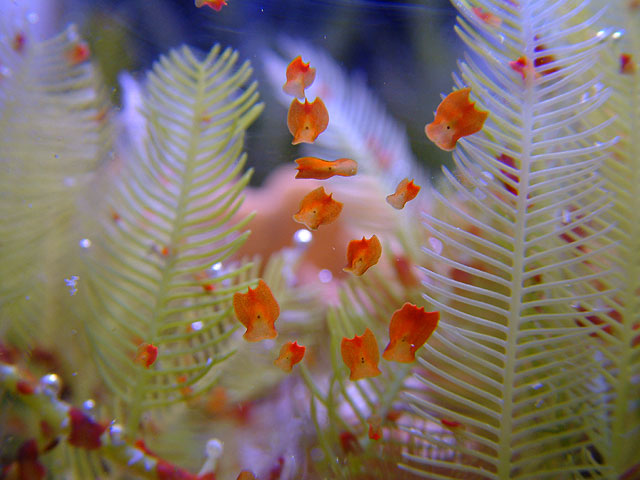
| What It Is | Nuisance flatworms (usually rust-red) |
| Looks Like | Flat rust/orange ovals on glass & rock |
| Main Cause | Hitchhiker; nutrients fuel the bloom |
| Difficulty | Easy to moderate |
| Best Fixes | Siphon + predators + treatment if heavy |
Overview
The common reef flatworm (often called red planaria, Convolutriloba) is usually a cosmetic nuisance rather than a coral-eater — but a heavy bloom can blanket rock and sand, shade corals, and become an eyesore. The real hazard comes at the end: when a big population dies off suddenly (or after a treatment), the flatworms can release a toxin, so removing biomass first is key. Note this is different from the rarer Acropora-eating flatworm, an actual coral pest requiring SPS dips.
How to Identify It
Small flat, oval, rust-red to orange-brown bodies (often with a tiny tail notch) gliding across glass, sand and low-flow rock, thickest where light and nutrients are high. They’re flat and slide smoothly — unlike bristleworms (segmented, bristled) or copepods (tiny, darting). A few is normal reef life; a carpet is a bloom worth addressing.
How to Get Rid of It
- Siphon heavily first — remove as many as possible during water changes, especially before any chemical treatment, to cut the toxin load. A filter sock and running carbon help capture stragglers.
- Natural predators — several wrasses eat flatworms: a sixline or cryptic sixline wrasse, a melanurus wrasse, or a springeri pseudochromis will steadily hunt them down.
- Flatworm treatment (heavy cases) — a commercial flatworm remedy clears a bad bloom, but ONLY after you’ve siphoned out most of them, with fresh carbon ready and a big water change on standby — the mass die-off toxin is the real danger.
- Improve flow & cut nutrients — flatworms bloom in nutrient-rich, low-flow tanks; correcting both shrinks the population naturally.
Prevention
Dip and inspect frags — flatworms hitchhike on coral and plugs. Keeping nutrients moderate and flow strong prevents the population explosions that turn a harmless few into a carpet. A flatworm-eating wrasse as a standing tankmate keeps numbers permanently low.
What Doesn’t Work
Dosing treatment on a full-blown carpet: the massed die-off can toxin-crash the tank — siphon first, always. Assuming all flatworms eat coral: the common red ones don’t; don’t panic-treat a light population. No carbon on hand: carbon absorbs released toxins during a die-off — have it ready.
Helpful Livestock & Related Guides
Sixline Wrasse · Cryptic Sixline Wrasse · Melanurus Wrasse · Springeri Pseudochromis