
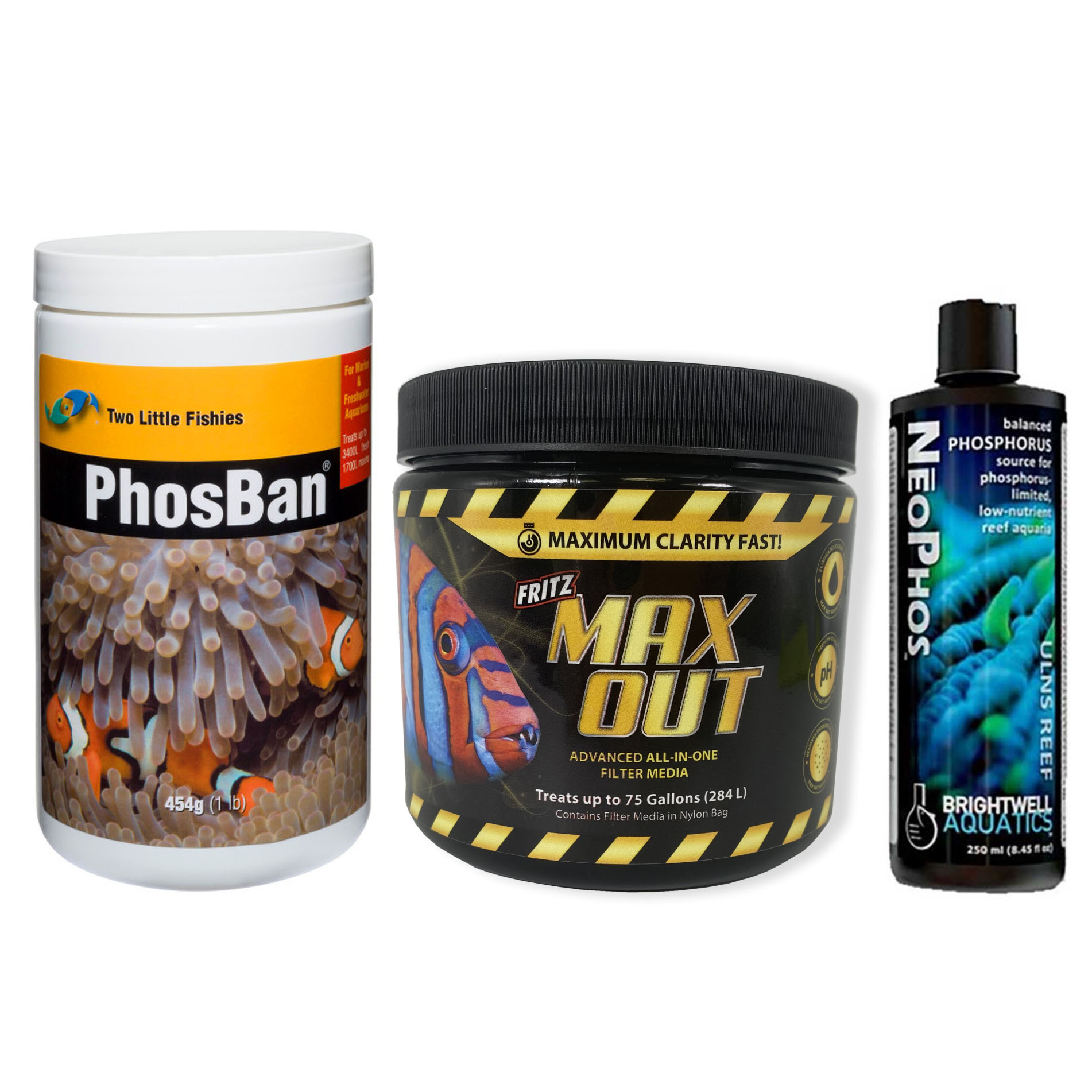
Overview
GFO, granular ferric oxide, is a media that chemically binds phosphate and pulls it out of the water. Run in a small reactor, it is one of the most reliable ways to keep phosphate low, which starves nuisance algae and helps corals color up.
How It Works
Phosphate is the main fuel for hair algae, cyano, and other nuisances. GFO’s iron-oxide granules adsorb phosphate as water passes over them, locking it into the media. When the media is saturated you swap it for fresh, and the phosphate leaves with the spent GFO.
Running It in a Reactor
GFO works best in a fluidized reactor where water tumbles the granules gently. Too much flow blasts and powders the media, releasing fines into the tank; too little and it channels and underperforms. A gentle tumble is the sweet spot. You can also run it passively in a media bag in a high-flow area, though a reactor is more efficient.
Why It Helps
It gives you direct control over phosphate independent of nitrate, which is handy when phosphate is the specific problem. Paired with a skimmer and good husbandry, it is a mainstay of algae control and low-nutrient reefs.
Cautions
Don’t yank phosphate down too fast. A sudden drop can shock corals, especially SPS, so use a modest amount of GFO and lower phosphate gradually. Rinse GFO before use, keep the tumble gentle to avoid fines, and change it on schedule since exhausted GFO stops working and can even leach a little back. And don’t chase zero phosphate; corals need a little.
Frequently Asked Questions
What does GFO do?
GFO (granular ferric oxide) chemically binds phosphate and removes it from the water. Since phosphate fuels nuisance algae, controlling it with GFO helps starve algae and keeps corals colored up.
How do I run GFO?
Best in a fluidized reactor with a gentle tumble, enough flow to keep the granules moving lightly but not so much that they grind into fines. You can also run it in a media bag in high flow, though a reactor is more efficient.
How often do I change GFO?
When it is exhausted, which depends on your phosphate load, often every few weeks. A phosphate test tells you: when levels stop dropping or start creeping up, the media is spent and it is time to swap it.
Can GFO lower phosphate too fast?
Yes. A sudden phosphate crash can shock corals, especially SPS. Use a modest amount of GFO and bring phosphate down gradually rather than all at once, aiming for low-but-not-zero.