
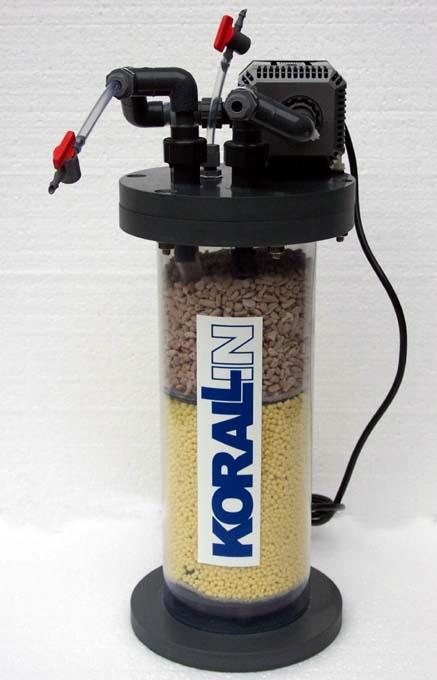
Overview
A denitrator is a device that lowers nitrate biologically, growing anaerobic bacteria that convert nitrate into harmless nitrogen gas. It is a hands-off way to keep nitrate down without constant water changes, useful for heavily stocked tanks or anyone fighting stubborn nitrate that skimming and water changes alone won’t beat.
How It Works
Inside the oxygen-poor (anaerobic) zone of a denitrator, specialized bacteria strip oxygen from nitrate (NO3) to breathe, stepping it down to nitrite and then to nitrogen gas (N2) that bubbles out of the water. The trick is a very slow flow, so the oxygen is used up along the way and the anaerobic zone can develop and stay active.
The Common Types
Two designs dominate. A coil denitrator runs water through a long, narrow coil of tubing at a trickle, so oxygen depletes gradually as it travels. A sulfur denitrator packs sulfur media (usually followed by a calcium or aragonite chamber) where sulfur-based bacteria drive the same nitrate-to-nitrogen conversion. Sulfur units are popular for their efficiency and steady output.
Why They Help
They provide continuous nitrate export, which matters most in heavily stocked fish systems where water changes can’t keep up. By pulling nitrate down steadily, a denitrator helps prevent algae, keeps corals colored up, and cuts how often you need to change water.
Cautions
Denitrators demand patience and tuning. It can take weeks to establish the bacteria and dial in the flow. Run it too fast and it does nothing; too slow and it can go septic, producing toxic hydrogen sulfide (a rotten-egg smell) that is dangerous if it dumps into the tank. Sulfur units also lower pH, which is why the calcium chamber after them matters. Start slow, test the output, and increase flow gradually.
Frequently Asked Questions
What does a denitrator do?
It lowers nitrate biologically by growing anaerobic bacteria that convert nitrate into nitrogen gas, which harmlessly leaves the water. It is a continuous, hands-off alternative to relying only on water changes for nitrate control.
Do I need a denitrator?
Not for most tanks. Good husbandry (skimming, water changes, a refugium) controls nitrate in a typical reef. Denitrators earn their keep in heavily stocked fish systems or tanks where nitrate stays stubbornly high despite other methods.
Are denitrators safe?
Yes, when tuned properly. The main risk is running the flow too slowly, which lets the unit go septic and produce toxic hydrogen sulfide. Dial in the flow gradually and check the output, and it is safe and effective.
How long does a denitrator take to work?
Several weeks. The anaerobic bacteria need time to colonize and the flow needs careful tuning, so a denitrator is a slow, steady tool rather than an instant fix for a nitrate spike.