
Plectorhinchus vittatus
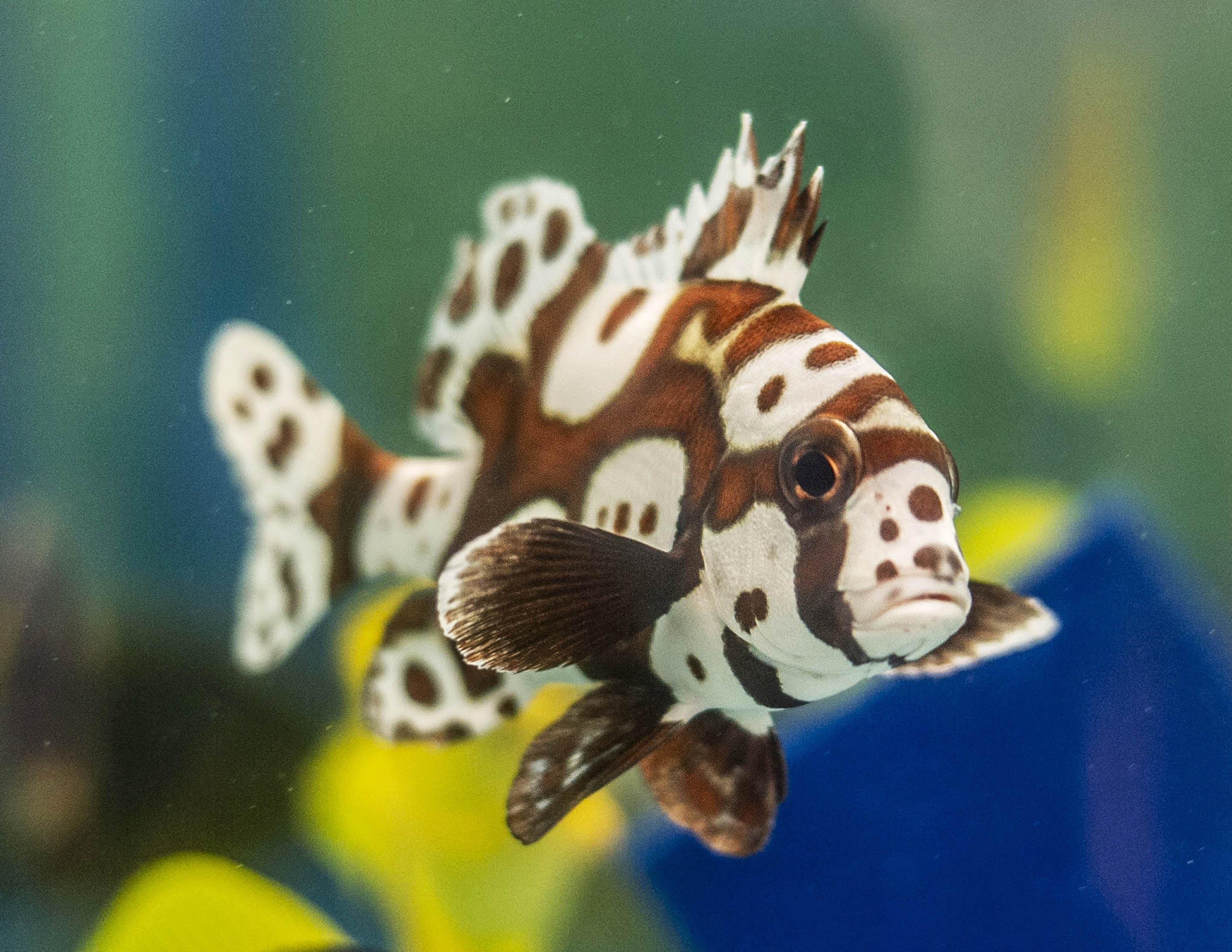
| Identification | Juveniles are striking brown and white with bold irregular spots and exaggerated flowing fins. Adults transition to a white body with horizontal black stripes and yellow-orange spotted fins. One of the most dramatic color transformations in the marine aquarium hobby. |
| Maximum Length | 18 inches (45 cm) |
| Origin | Indo-Pacific — Red Sea, East Africa east through Indonesia, Philippines, and northern Australia |
| Minimum Tank Size | 180 gallons (for adults); juveniles can be kept in 75+ gallons temporarily |
| Reef Compatibility | No — will eat shrimp, small crabs, worms, and small fish |
Behavior
The Oriental Sweetlips is one of the most visually arresting fish in the marine aquarium hobby, largely due to its extraordinary juvenile-to-adult color transformation. Juveniles display a dramatic brown-and-white blotched pattern with large, flowing fins and a distinctive wiggling swimming motion thought to mimic a toxic flatworm — an anti-predator adaptation. As the fish matures, it gradually transitions to the adult coloration of bold black horizontal stripes on a white body with yellow-spotted fins. This transformation occurs slowly over several years and is fascinating to observe. Adult Oriental Sweetlips are active, open-water swimmers that do best in large aquariums with plenty of open swimming space and robust, similarly-sized tankmates. They are generally peaceful toward fish too large to eat but will consume any crustacean or small fish within reach.
Diet & Feeding
Carnivore. In the wild feeds on crustaceans, small fish, worms, and benthic invertebrates. In captivity, offer frozen mysis shrimp, krill, chopped squid, silversides, and meaty marine preparations. Juveniles can be shy feeders — target-feed with tongs near a cave or overhang until the fish is eating confidently. Most specimens will learn to accept high-quality pellets over time. Feed once or twice daily.
Cautions
Not reef safe. Will consume ornamental shrimp, small crabs, worms, and small fish. Grows very large — adults require a substantial aquarium of 180 gallons or more. Juveniles are sometimes purchased on looks alone and quickly outgrow smaller systems; plan for adult size before purchasing.