
⚠ PALYTOXIN — HANDLE WITH CARE
Palythoas (and zoanthids) can contain palytoxin, one of the most potent natural toxins known. Wear gloves and eye protection, never handle with open cuts, and never scrape or boil rock with them in open air. Keep away from children and pets.
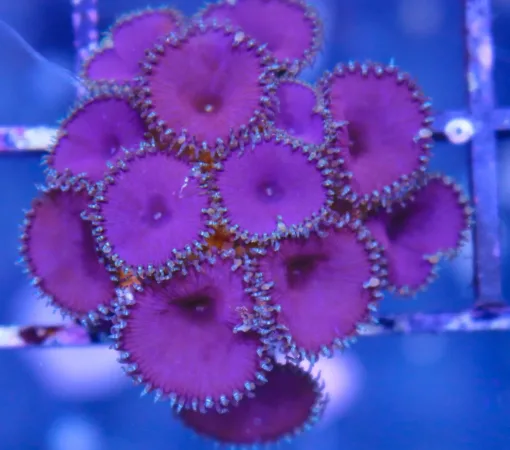
Palythoa sp.
| Care Level | Easy — great beginner coral |
| Lighting | Low to high |
| Water Flow | Low to moderate |
| Placement | Low to mid rock |
| Aggression | Peaceful, spreads |
| Coloration | Green, gold, "sunny D" and "grandis" morphs |
Color Variations
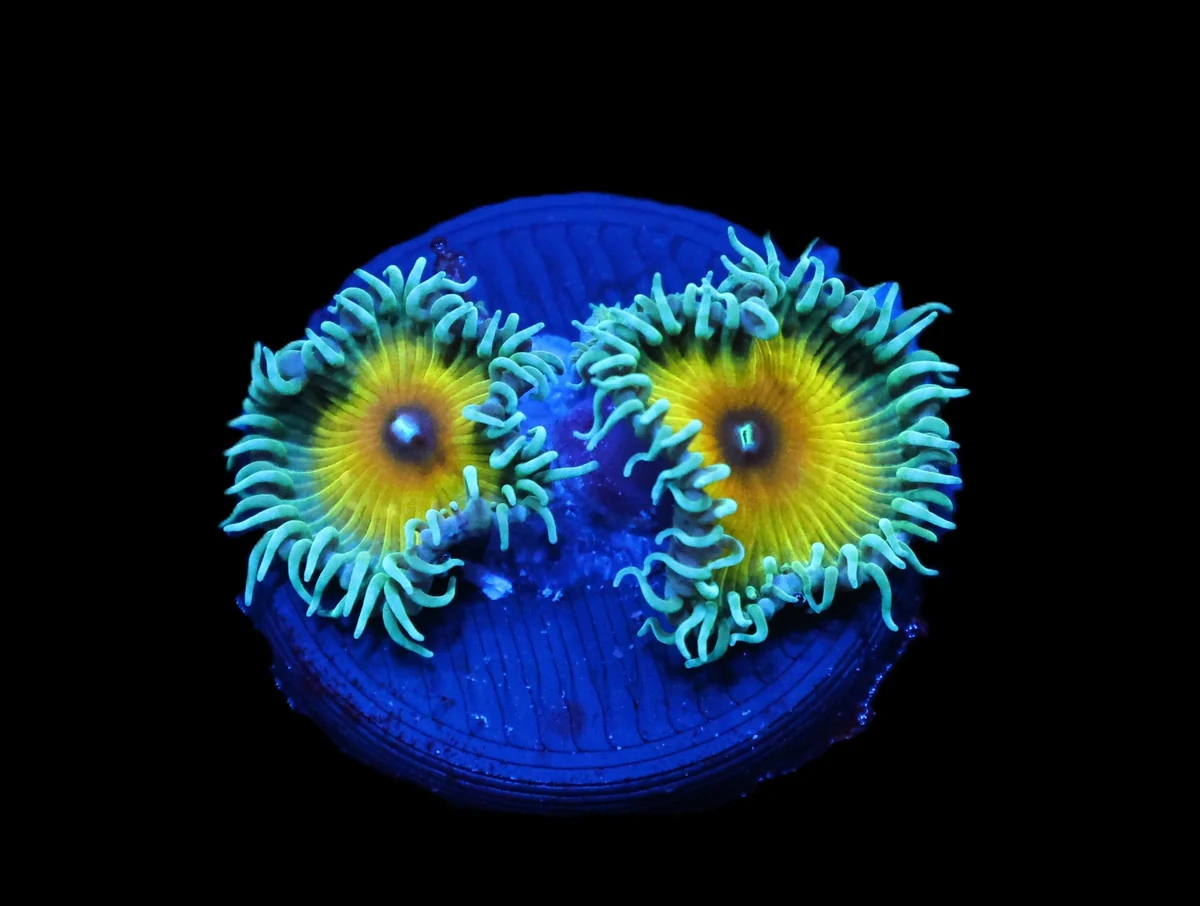
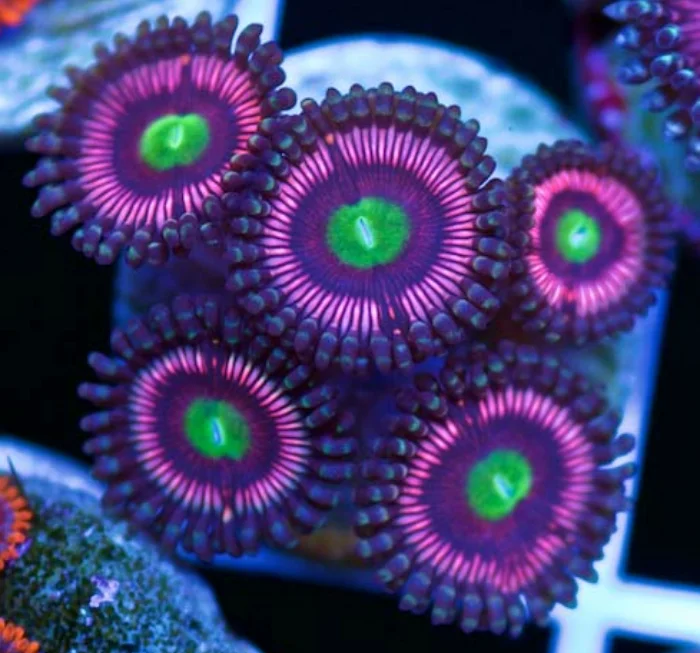
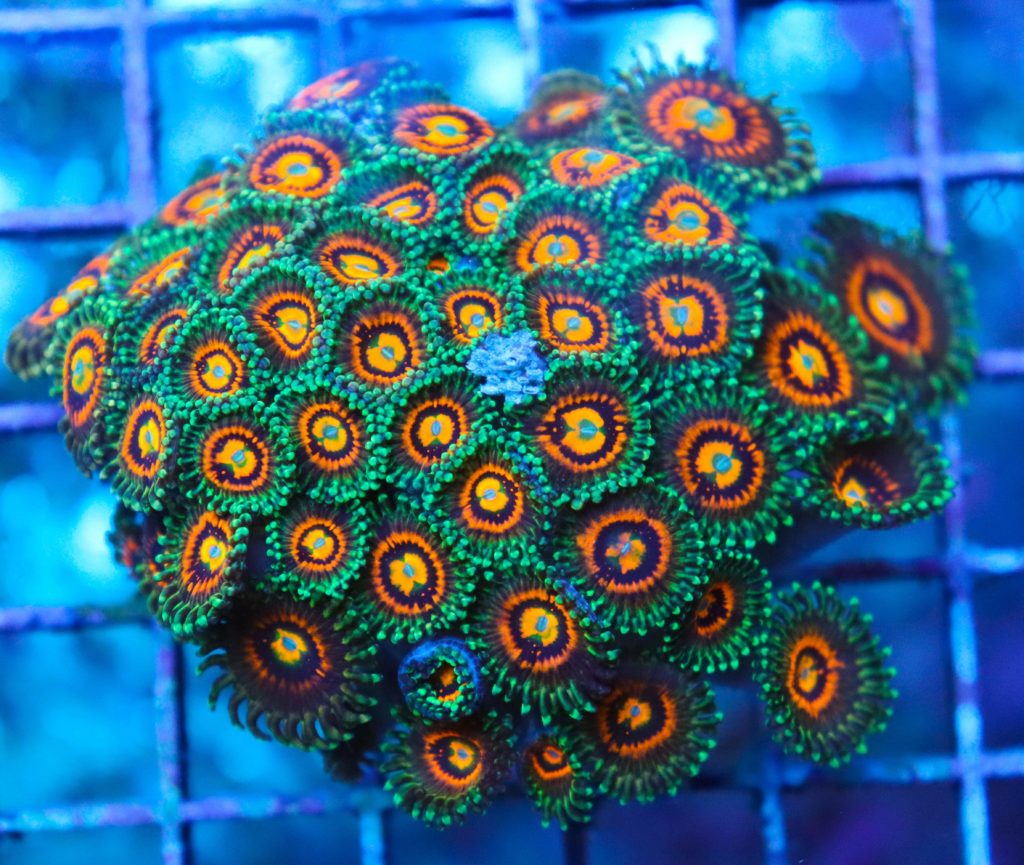
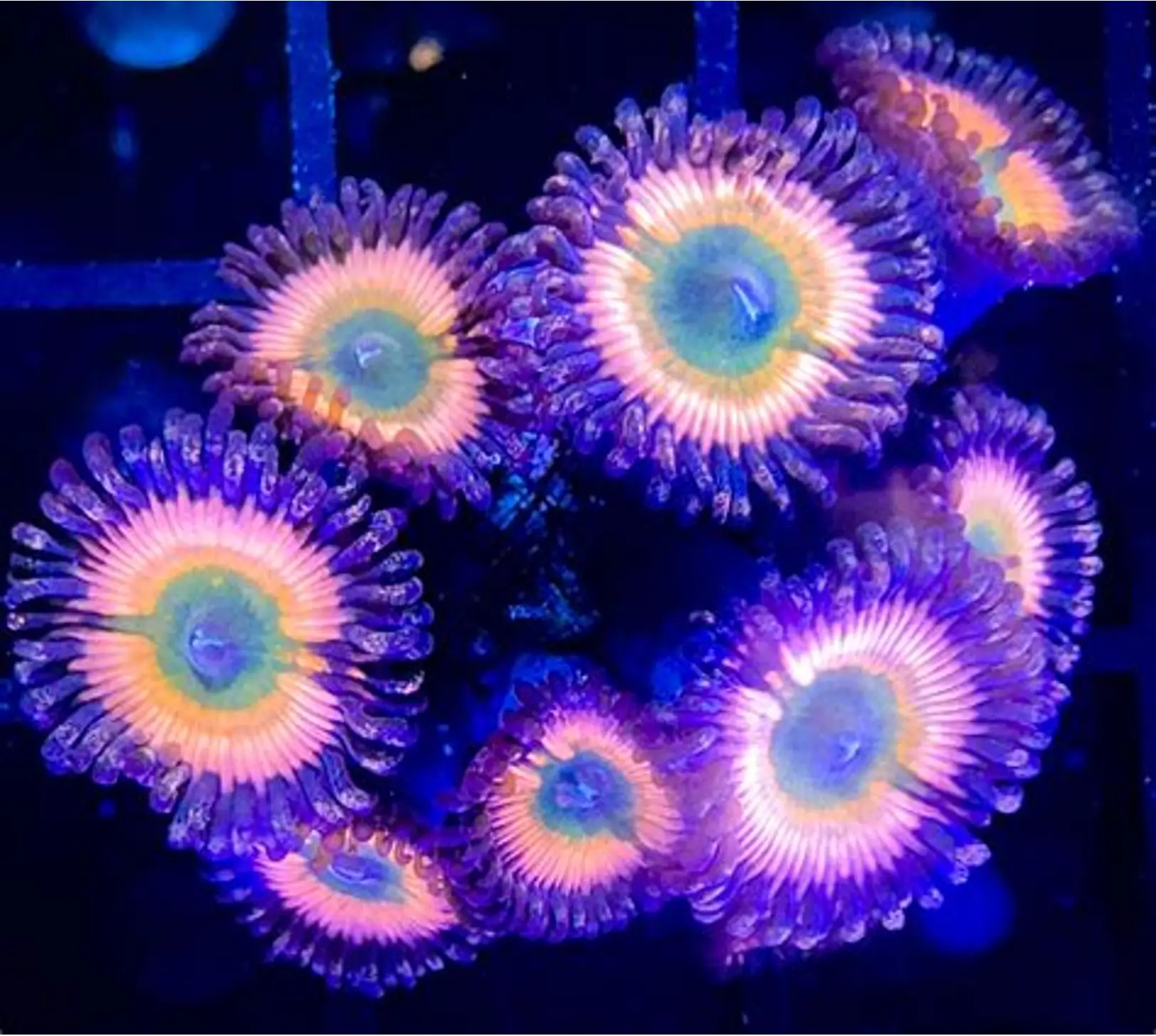
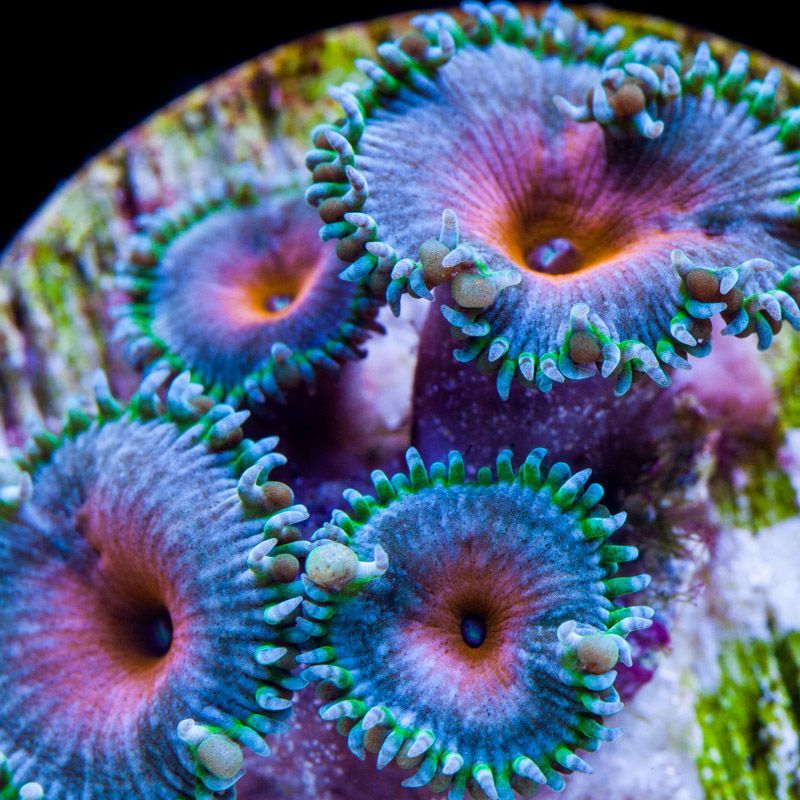
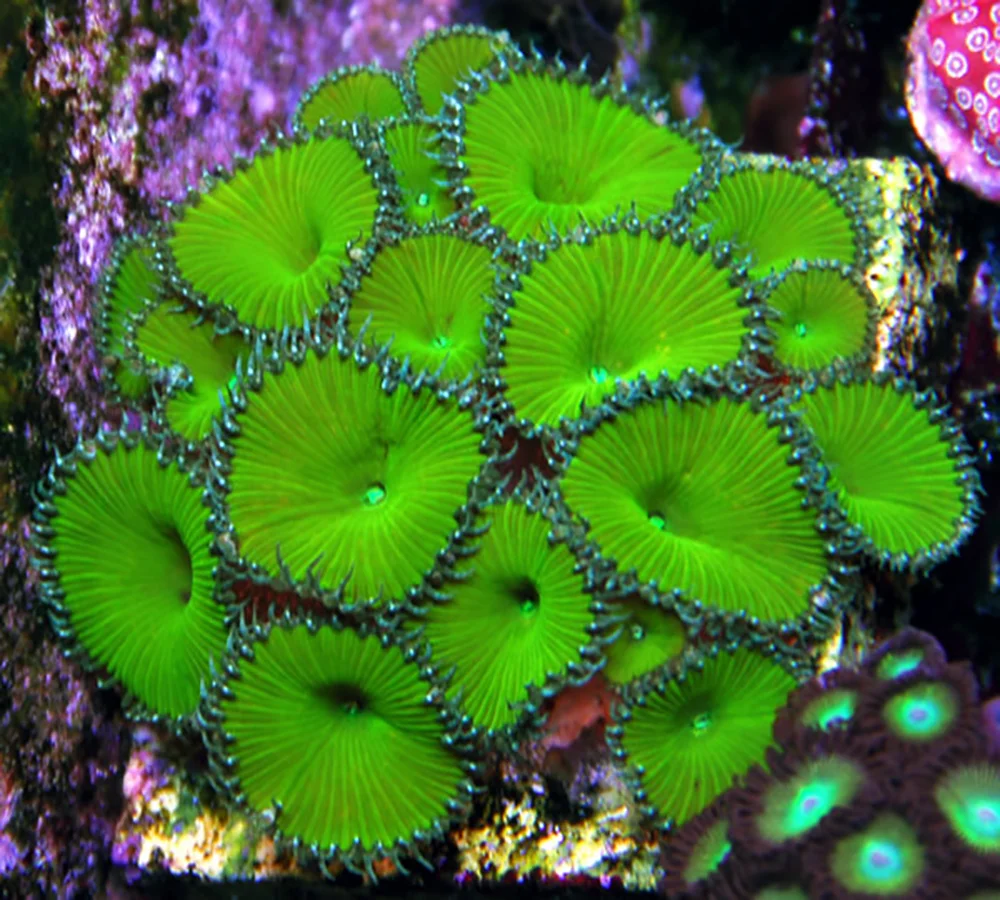
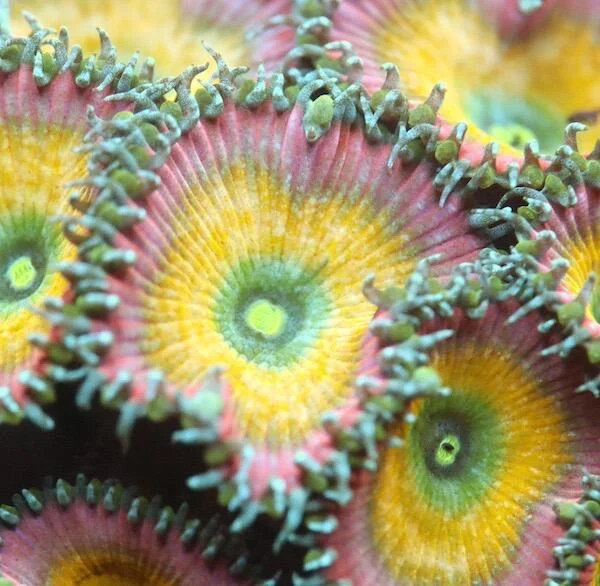
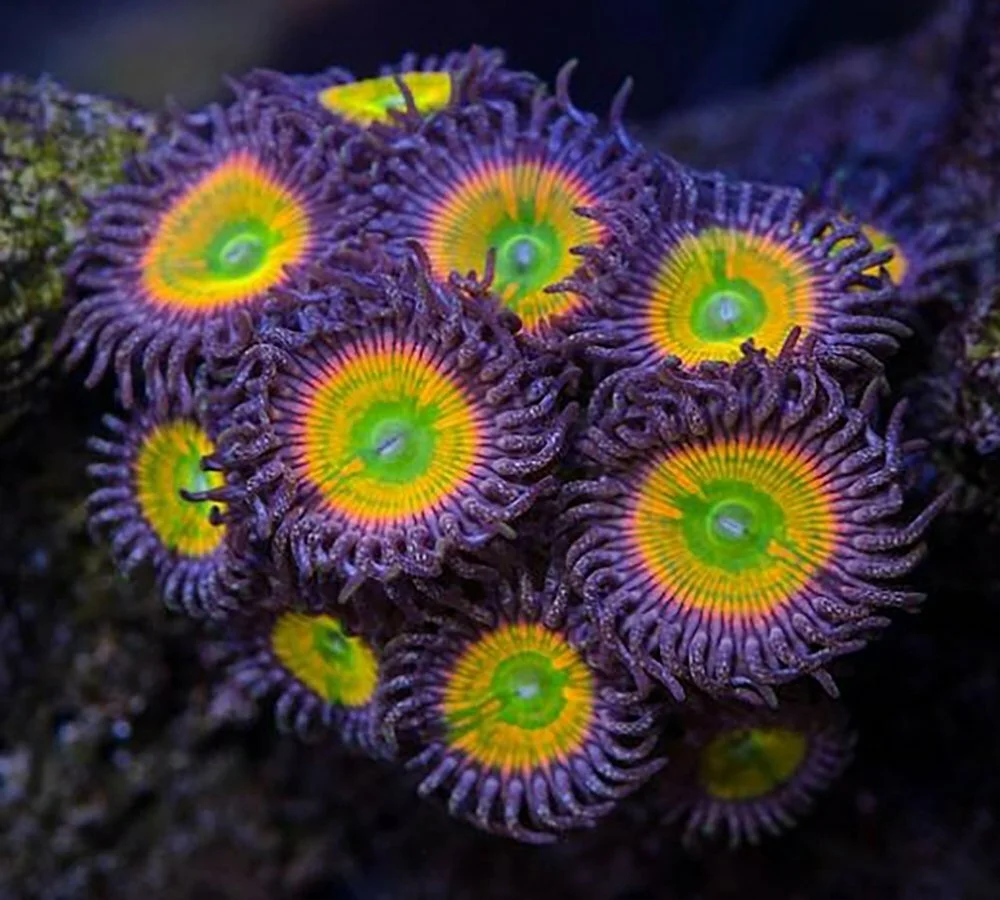
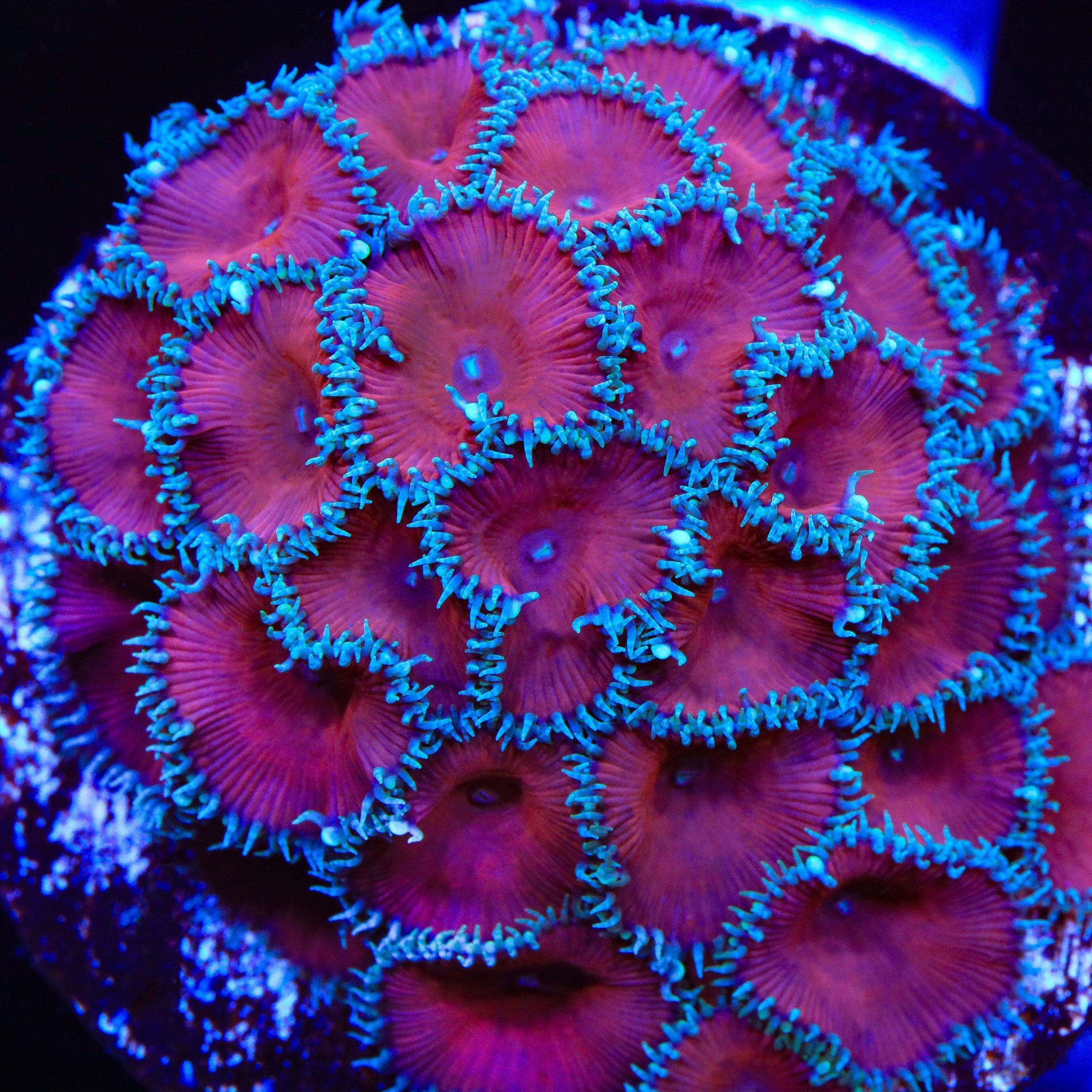
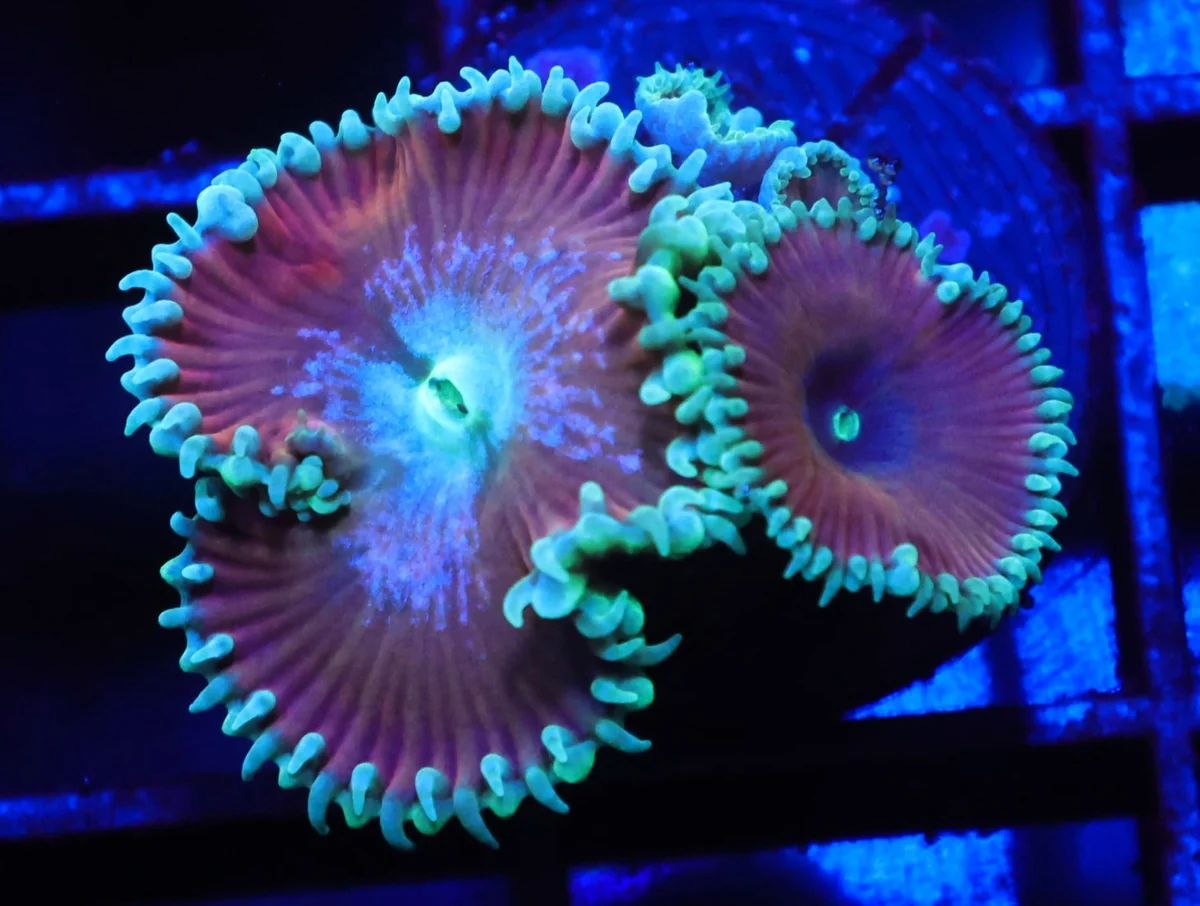
Palythoas come in a huge range of named designer morphs. The coloration is cosmetic — every one takes the same care described above. ⚠ Remember palythoas contain palytoxin: always wear gloves and eye protection when handling or fragging them, and never dry-scrape or boil rock with palys.
Overview
Palythoas (“palys”) are the larger cousins of zoanthids — colonial button polyps with bigger, often more muted or earth-toned coloration (though morphs like “Sunny D” and “Grandis” are striking). Hardy, fast-spreading, and beginner-friendly, they are cared for just like zoas.
Care & Placement
Very adaptable — low to high light and gentle-to-moderate flow, coloring best under moderate light. They encrust and spread across rock. If polyps stay closed, check for pests, flow, or irritation from neighbors.
Feeding
Photosynthetic, but they respond well to feeding — target-feed small meaty or coral foods to boost growth and color.
Propagation
Easy to frag — cut the mat between polyps or pop polyps off a plug and glue to new plugs.
Full step-by-step: How to Frag Zoanthids and Palythoas (Safely)
Cautions
See the warning above: palys can carry palytoxin — always wear gloves and eye protection, never handle with open cuts, and never boil/scrape rock with them in open air. A fast spreader; give it room or trim.