
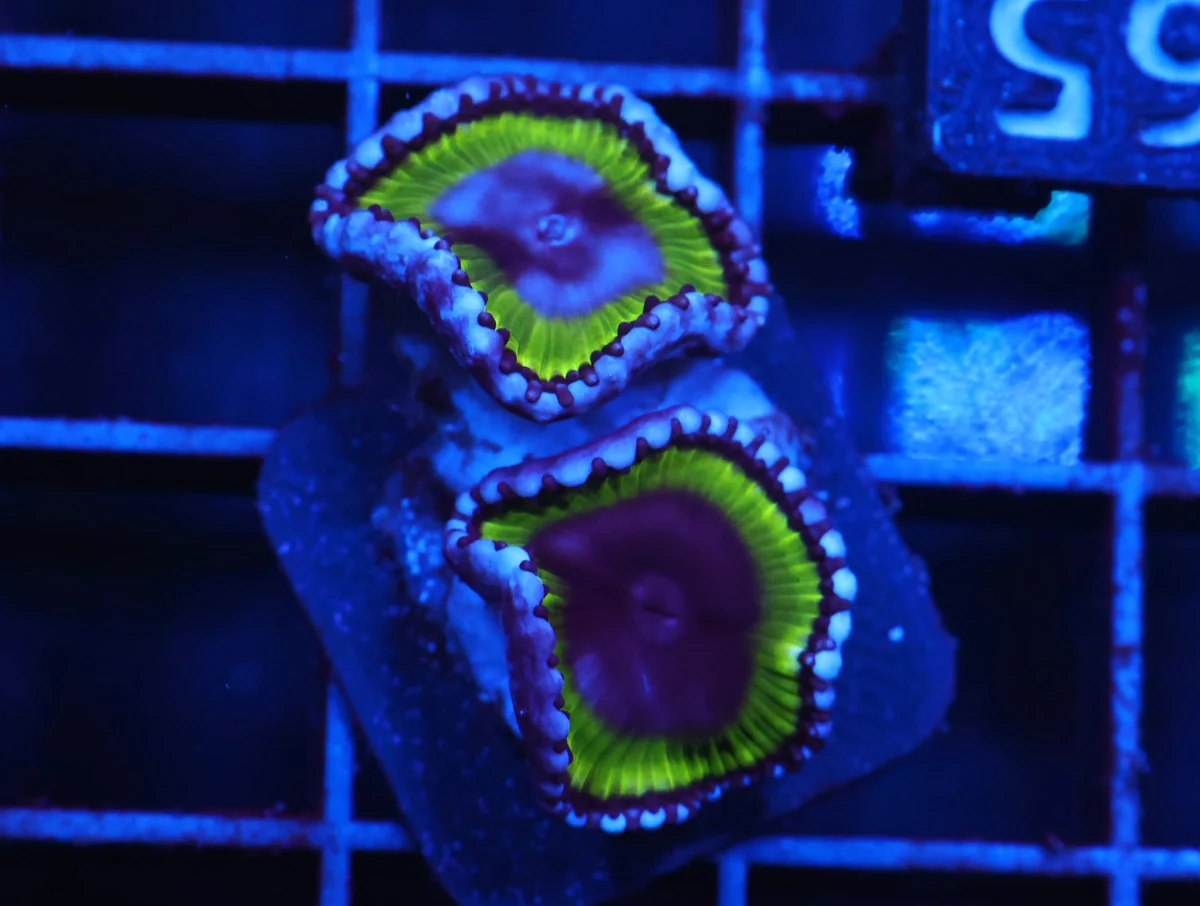
Palythoa grandis
| Care Level | Easy |
| Lighting | Low to moderate |
| Water Flow | Low to moderate |
| Placement | Rock, low to mid tank |
| Aggression | Peaceful (chemical warfare) |
| Coloration | Green/brown, very large polyps |
Overview
Palythoa grandis — often called the giant or sun palythoa — is a large-polyp palythoa with big, showy polyps far larger than typical zoas. It is hardy and fast-growing, an easy way to add a colony of impressive, swaying polyps to the reef.
Care & Placement
Easy. Give it low to moderate light and flow, on rock or the sand bed, and it will grow quickly into a colony. It is one of the more forgiving corals for a newer reefer, tolerant of a range of conditions.
Feeding
Photosynthetic, but its large polyps readily capture meaty foods, and feeding noticeably speeds growth. Target-feed occasionally for a fuller, faster-spreading colony.
Propagation
Easy: cut sections of the mat or individual polyps and attach them to rubble, where they take hold and multiply.
Cautions
⚠ Palytoxin. Palythoas contain palytoxin, one of the most dangerous natural toxins known. Always wear gloves and eye protection when handling, fragging, or removing them, never scrape or boil rock with palys in the open air, and keep them away from cuts and your face. Like other zoas and palys they also wage chemical warfare, so run activated carbon and give sensitive corals space.
Frequently Asked Questions
Is Palythoa grandis toxic?
Yes — palythoas contain palytoxin, a potent and genuinely dangerous toxin. Wear gloves and eye protection when handling or fragging, never boil or dry-scrape rock with palys, and keep them away from cuts and your face.
Is Palythoa grandis easy to keep?
Very. It is hardy, undemanding on light and flow, and fast-growing, which makes it a great beginner colony coral — the only real caution is handling it safely because of palytoxin.
How is Palythoa grandis different from zoanthids?
It is a palythoa with much larger polyps than typical zoas, giving a bolder, more dramatic look. Care is similar, but its size and the palytoxin caution make safe handling especially important.