
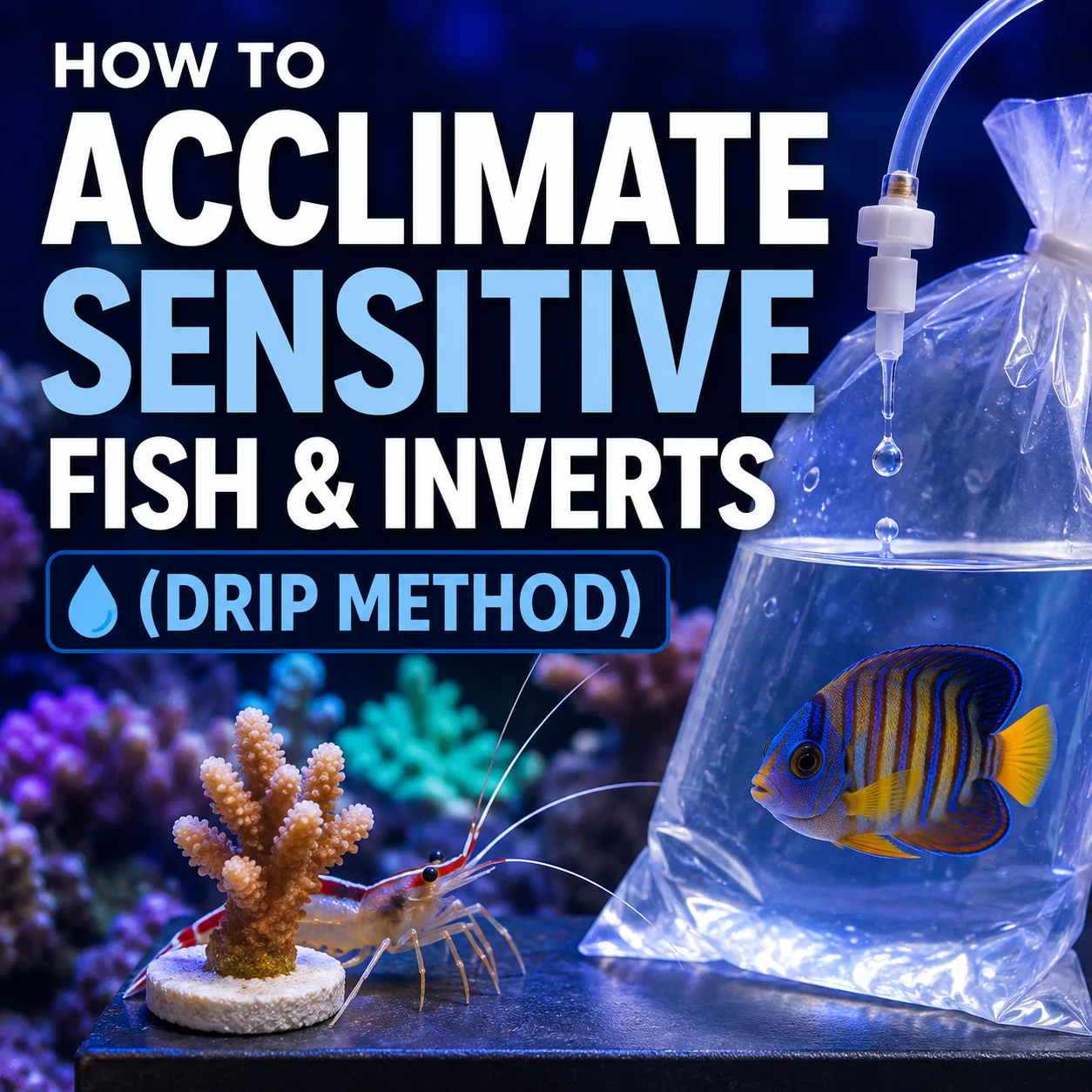
Overview
Shrimp, snails, starfish, sea cucumbers, anemones, and delicate fish like wrasses and anthias are far more sensitive to sudden water changes than a hardy damsel. For these animals, slow drip acclimation — not a quick float-and-dump — is the difference between a thriving addition and a dead one. This guide covers the drip method and which livestock truly needs it.
Why Invertebrates Are So Sensitive
Most marine invertebrates are poor osmoregulators: they cannot buffer their internal chemistry against a rapid change in salinity the way a fish can. Shipping water often drifts in pH, temperature, and salinity, so dropping an invert straight into your tank is an osmotic shock that can be fatal within hours. Echinoderms (stars and cucumbers) are the classic example — they frequently die days later from an acclimation that was simply too fast.
How to Drip Acclimate, Step by Step
You need a length of airline tubing, a control valve (or a loose knot), and a clean container.
- Float the sealed bag in the tank 15–20 minutes to match temperature.
- Open the bag and pour the animal and its water into a clean container below the tank.
- Start a siphon from the tank through the airline; set the drip to about 2–4 drops per second.
- Let it run until the container volume has doubled, then discard half and repeat — aim for 45–90 minutes for sensitive inverts (longer for stars and anemones).
- Net or gently lift the animal into the tank. Never pour the shipping water into your display.
Species That Demand a Slow Drip
Cleaner and other shrimp, snails, starfish, brittle stars, sea cucumbers, sea urchins, anemones, and clams should always be drip acclimated. Among fish, wrasses, anthias, mandarins, and any fish that arrived stressed or from very different water benefit most. When in doubt, drip — it rarely hurts and often saves the animal.
Common Mistakes
The big ones: going too fast, skipping the temperature step, and adding the nutrient- and copper-laden shipping water to your tank. A few inverts (some anemones, cucumbers) should also never be lifted through the air — keep them submerged during the transfer. Acclimate into a quarantine tank when you can, so you are not dripping shipping water toward your display at all.
Related Guides
Frequently Asked Questions
How long should I drip acclimate invertebrates?
Aim for 45 to 90 minutes for most sensitive inverts, and longer — up to a couple of hours — for starfish, sea cucumbers, and anemones. The goal is to at least double the water volume slowly so salinity and pH change gradually.
Should I add the bag water to my tank?
No. Shipping water is high in ammonia and waste and may contain copper or medication residue. Always net or lift the animal out and discard the bag water rather than pouring it into your display.
Do I need to drip acclimate hardy fish too?
Hardy fish tolerate a shorter float-and-net acclimation, but sensitive fish and virtually all invertebrates do much better with a slow drip. When unsure, drip — it costs you time, not livestock.