
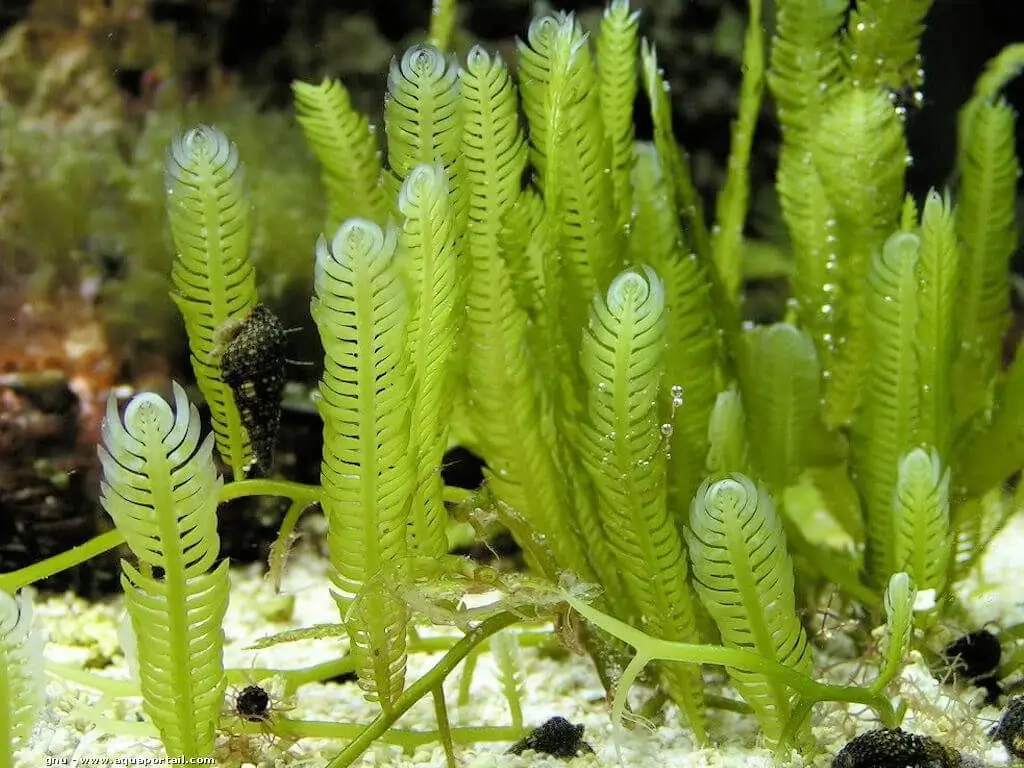
Caulerpa mexicana
Telling it apart. This is the feathered Caulerpa: each upright frond is flattened and divided into closely-set branchlets running either side of a central midrib, so it reads as a green feather or fern. Compare Blade Caulerpa (C. prolifera), whose blades are plain, undivided straps with no branchlets at all — that single difference is the quickest way to separate the two.
| Care Level | Easy |
| Lighting | Moderate |
| Water Flow | Low to moderate |
| Placement | Refugium preferred; display only with active control |
| Aggression | Peaceful, but invasive |
| Coloration | Bright to deep green |
Overview
The feather form of Caulerpa, and one of the most useful macroalgae you can put in a refugium. Fronds rise from a creeping runner like small green ferns, growing quickly and stripping nitrate and phosphate as they go. The ferny texture also makes it one of the better-looking Caulerpas if you want a planted, lush look rather than the tangled mop of Chaetomorpha.
Care & Placement
Easy to the point of being enthusiastic. Moderate light and gentle flow are all it asks, and it will spread along its runners from there. Keep it in a refugium or on an isolated island rock, because those runners travel and will climb over corals given the opportunity. Harvest it on a schedule rather than letting it fill the space.
Feeding
Photosynthetic and a heavy consumer of nitrate and phosphate — which is exactly why it earns refugium space. The export only actually happens when you harvest and physically remove growth; algae left to mature and die back returns those nutrients straight to the tank.
Propagation
Trivially easy — a cut runner with a frond or two attached will anchor and grow. Most keepers end up giving it away rather than propagating it on purpose.
Cautions
The caution that matters with any true Caulerpa: it can “go sexual” (sporulate) — releasing its contents into the water, turning it milky, and dying back all at once, which can crash water quality overnight. Reduce the risk by harvesting regularly so the algae never grows old and crowded, avoiding sudden lighting changes, and running refugium light on a reverse or 24-hour schedule. It is also genuinely invasive and will creep over corals if left unchecked, and some regions restrict Caulerpa species outright — check your local rules.