
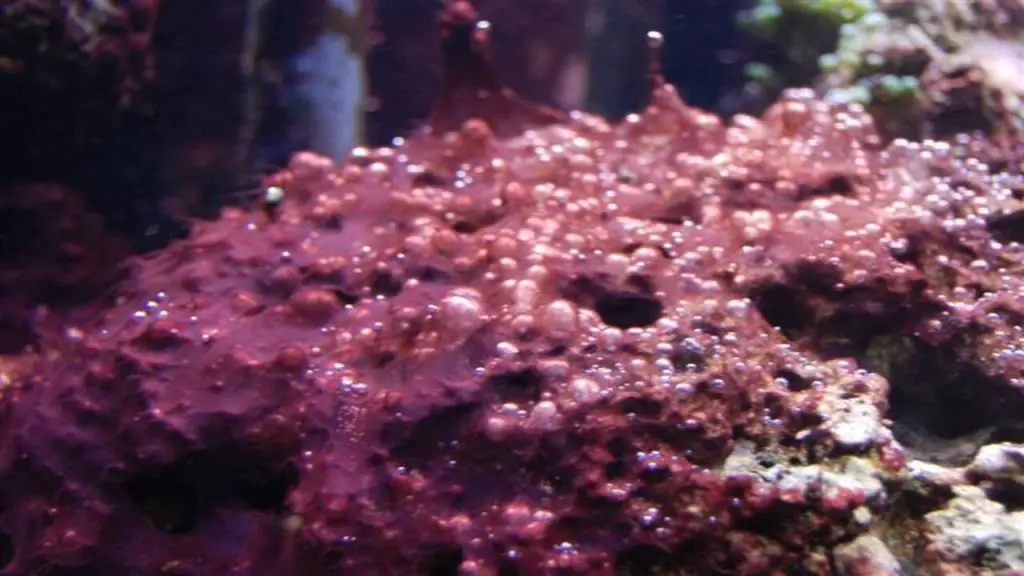
| What It Is | Cyanobacteria (not true algae) |
| Looks Like | Red/maroon slimy film with bubbles |
| Main Cause | Nutrients + low flow + old light/RODI |
| Difficulty | Easy to moderate |
| Best Fixes | Flow + nutrient export + manual siphon |
Overview
Red slime isn’t algae at all — it’s cyanobacteria, a bacterial mat that spreads as a red-to-maroon sheet, often trapping oxygen bubbles. It loves the combination of excess nutrients, low flow, and light, so it colonizes dead spots: sand beds, shaded rock, and low-circulation corners. Correct those conditions and it retreats fast; cyano collapses more quickly than most algae once you take away what it needs.
How to Identify It
A slimy, sheet-like film — dark red, maroon, or sometimes green/black — that peels off in one piece and often carries a dusting of tiny oxygen bubbles by afternoon. It smothers sand and rock and reappears within days if only removed. The peel-off-in-sheets texture and bubble specks distinguish it from filamentous hair algae.
How to Get Rid of It
- Increase flow — the most overlooked fix. Add or reposition a powerhead to blow out the dead zones where cyano settles; it struggles in well-circulated water.
- Siphon it out — physically remove the mats during water changes (they lift off easily), exporting the trapped nutrients with them.
- Export nutrients — water changes, skimming, less feeding, and fresh RODI. Check phosphate and nitrate; cyano often blooms when one is high.
- Blackout or products, if needed — a 2–3 day lights-out (corals tolerate it) knocks cyano back hard; commercial “red slime removers” work but treat the symptom, so fix flow/nutrients too or it returns.
Prevention
Keep strong, varied flow with no dead spots, feed conservatively, use RODI water, and replace aging bulbs (shifted spectrum from old lights can favor cyano). Stable moderate nutrients and good circulation make a tank cyano-resistant.
What Doesn’t Work
Only siphoning it: without more flow and nutrient export it’s back in a week. Antibiotic dosing as a first resort: it clears cyano but can hit your biofilter — save it for stubborn cases and address the cause. Cranking nutrients to zero: overcorrecting invites dinoflagellates, which are far worse.