
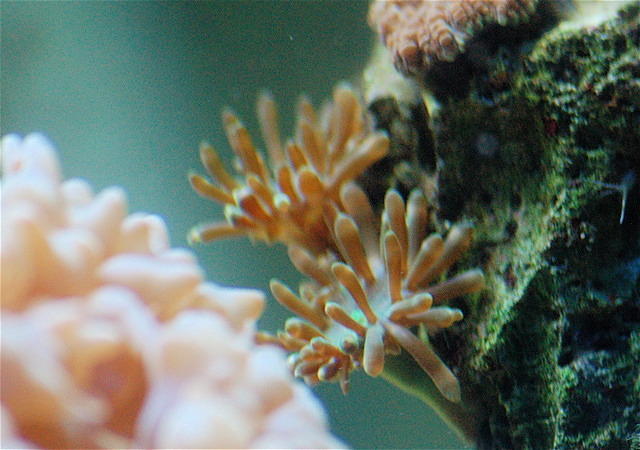
| What It Is | Nuisance rock anemone |
| Looks Like | Squat anemone, short bubble-tipped tentacles |
| Main Cause | Hitchhiker on rock/frags |
| Difficulty | Moderate — tougher than Aiptasia |
| Best Fixes | Injection, removal, some peppermints |
Overview
Majano anemones are the other common pest anemone, and they’re arguably worse than Aiptasia: they’re sturdier, sting corals more aggressively, and fewer predators reliably eat them. Like Aiptasia they spread from fragments and hitchhike on rock and frags. There’s no magic-bullet nudibranch, so control leans on injection and physical removal — done thoroughly and early.
How to Identify It
Shorter and stockier than Aiptasia, with a wider oral disc and short tentacles that often end in little bubble tips, usually green, brown, or reddish and sometimes iridescent under blue light. They sit tight to the rock and, unlike the wispy fast-retracting Aiptasia, look more like a small mushroom or mini-anemone. That squat, bubble-tipped look is how you tell the two apart.
How to Get Rid of It
- Injection — the most reliable method. Inject a commercial pest-anemone product or kalkwasser paste directly into the center. Majano are tough, so expect repeat treatments on survivors.
- Remove the rock and scrub — if the anemone is on a liftable rock, take it out and remove the Majano completely (every scrap), or seal it under glue/putty.
- Peppermint shrimp — hit or miss; some individuals pick at small Majano, many ignore them. Worth a try alongside injection, not as the sole plan.
- Kalkwasser paste — smothering the mouth with thick kalk paste (lights off, flow off briefly) kills them and is cheap.
Prevention
Same as Aiptasia: dip and inspect frags, quarantine rock, and deal with the first one or two immediately — Majano are far easier to beat as a pair than as a colony. Keep an eye on shaded low-flow areas where they like to establish.
What Doesn’t Work
Tearing them off the rock in-tank: fragments regrow, and you’ve now seeded new spots. Assuming a predator will fix it: unlike Aiptasia’s Berghia, no dependable Majano-specific predator exists. Waiting: Majano spread slower than Aiptasia but sting harder — procrastinating costs you corals.
Frequently Asked Questions
What are majano anemones?
Small pest anemones similar to aiptasia but with a wider, flatter, more colorful disc and shorter tentacles. Like aiptasia they sting corals and spread.
How do I get rid of majanos?
Inject them with a commercial pest-anemone treatment, kalkwasser paste or similar, destroying the whole animal. Manual removal risks leaving fragments that regrow.
Do majanos spread like aiptasia?
Yes. They reproduce and can take over rock if ignored, so treat them early and completely rather than letting them establish.