
Maxima Clam
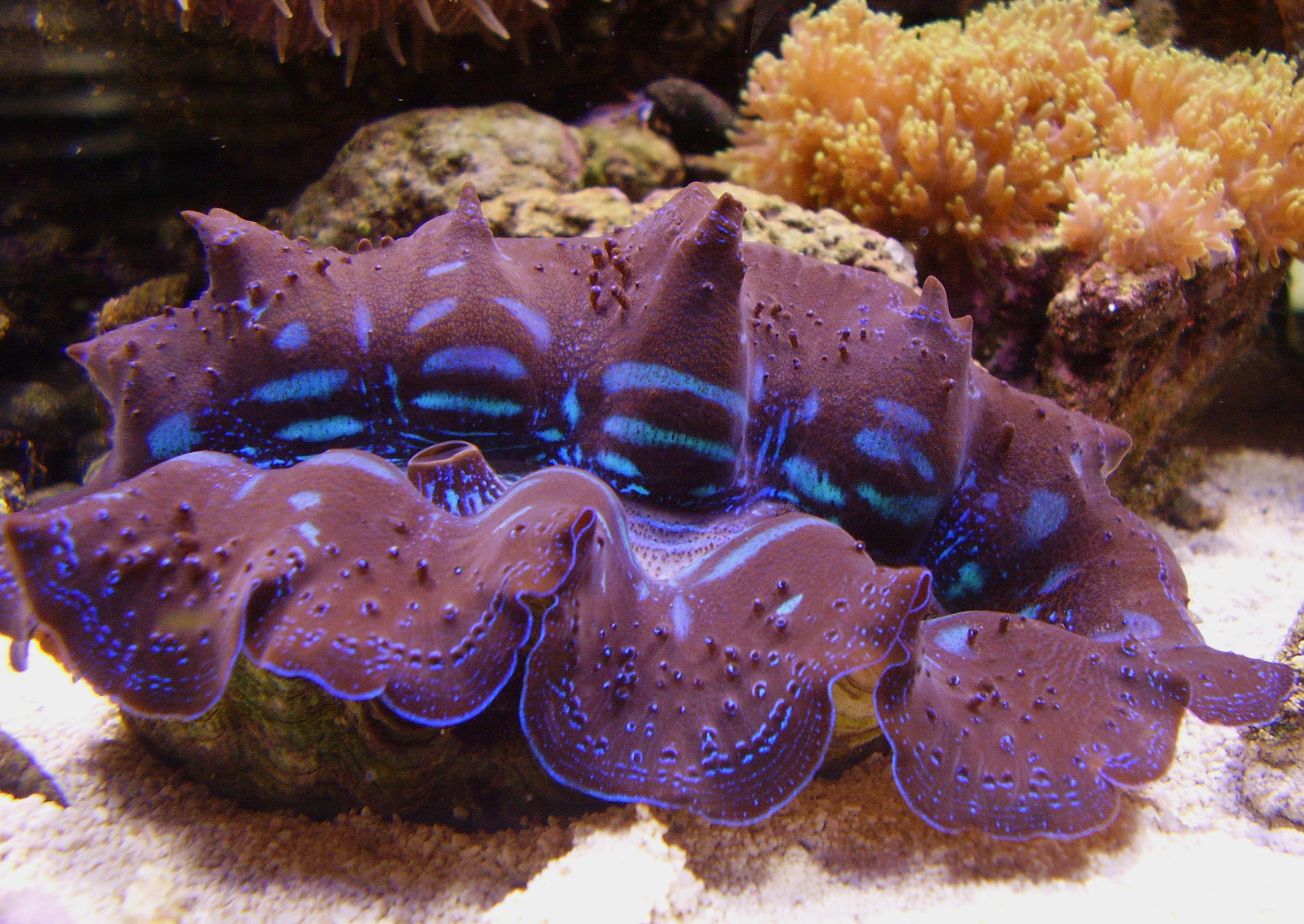
Photo: Wikimedia Commons (CC BY-SA)
Tridacna maxima
| Identification | Small giant clam with an elongated shell and a highly variable, often vivid mantle. Mantle colors range from electric blue, teal, green, gold, and brown to intricate spotted or striped patterns — no two are identical. The mantle edge is distinctly scalloped and the shell has prominent ridges running lengthwise. |
| Maximum Length | 12 inches (30 cm) |
| Origin | Indo-Pacific — widespread from the Red Sea and East Africa east through Polynesia; one of the most widely distributed giant clam species |
| Minimum Tank Size | 40 gallons; needs strong light reaching the bottom |
| Reef Compatibility | Yes — highly reef safe; benefits the reef by filtering water |
Behavior
Maxima Clams are sessile filter feeders that anchor themselves to hard substrate using a strong byssus. They are photosynthetic — the mantle contains symbiotic zooxanthellae algae that provide the majority of nutrition through photosynthesis. The clam will orient its open mantle toward the strongest light source. When disturbed or shaded, it will rapidly retract its mantle and partially close its shell. Unlike Derasa Clams, Maximas prefer to attach directly to rock or coral rubble rather than sitting in sand. A healthy, well-lit Maxima Clam is one of the most visually stunning additions to a reef aquarium.
Diet & Feeding
Primarily photosynthetic — zooxanthellae in the mantle supply most energy under strong reef lighting (250+ PAR recommended). Supplement with phytoplankton dosing a few times per week, especially in newer or lower-nutrient systems. Passive filter feeding on dissolved organics and fine particulates occurs continuously.
Cautions
Requires strong aquarium lighting — T5, metal halide, or quality LED capable of delivering high PAR to the substrate. Poor lighting is the most common cause of decline. Keep away from aggressive invertebrates that may nip at the mantle. Prefers to attach to hard substrate rather than sand.