
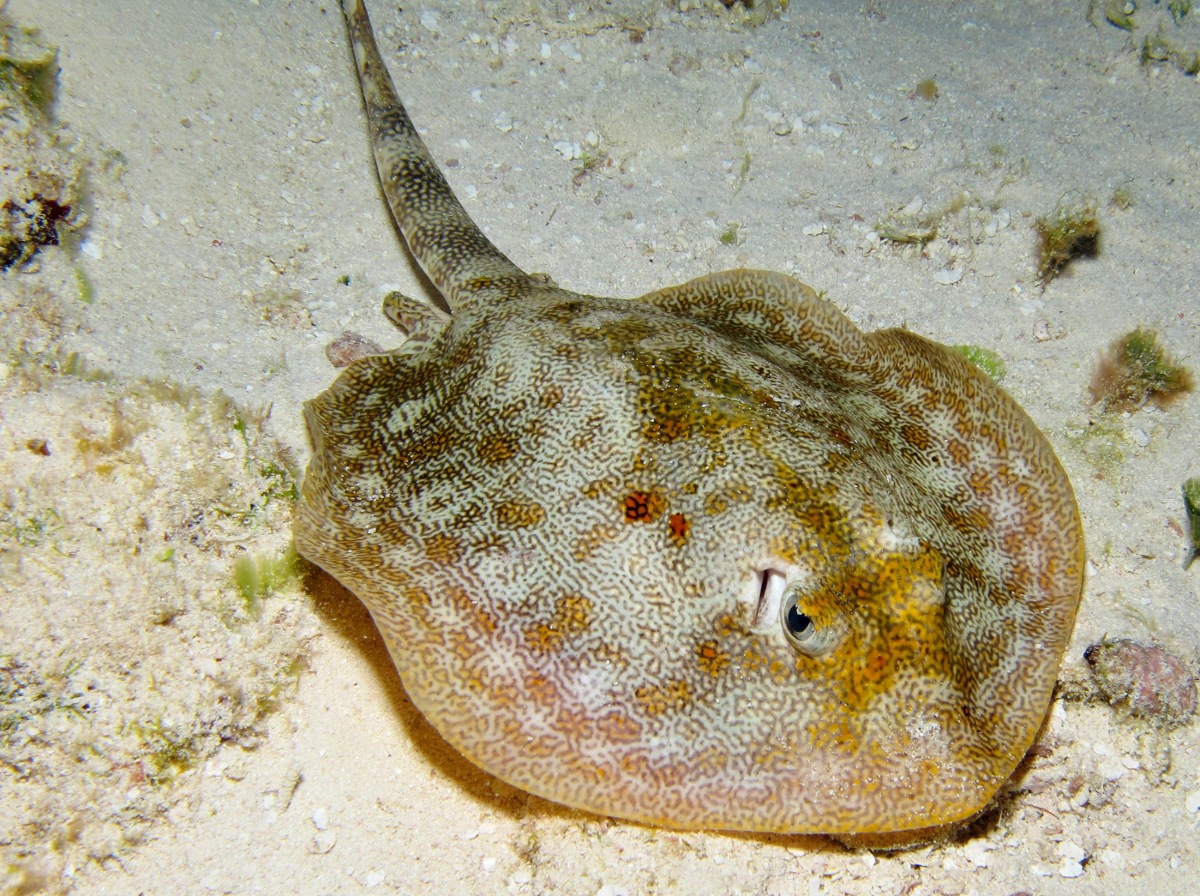
Urobatis jamaicensis
| Identification | Compact oval disc with a highly variable yellow to olive-brown reticulated or spotted pattern. Underside pale. The tail is relatively short with a venomous barb at the base. One of the few rays small enough for a home aquarium and native to the Caribbean. |
| Maximum Length | 14-inch disc width; total length ~24 inches |
| Origin | Western Atlantic — Caribbean Sea, Gulf of Mexico, Florida coast |
| Minimum Tank Size | 200 gallons (species-appropriate; must have open sand bed of 4+ inches) |
| Reef Compatibility | No — fish-only or FOWLR only; will disturb sand bed and may harm benthic invertebrates |
Behavior
A bottom-dwelling elasmobranch that spends most of its time buried in sand with only its eyes visible. Largely nocturnal and may be reclusive during the day. Yellow stingrays are curious and can become quite tame, but the venomous tail barb demands constant respect — never reach into the tank without checking the sand first. Keep with fish too large to be eaten (they will consume small fish and crustaceans) and avoid housing with aggressive species that may nip the ray.
Diet & Feeding
Carnivore. Feeds primarily on small crustaceans, worms, mollusks, and small fish in the wild. In captivity, offer meaty foods placed on or near the substrate: silversides, fresh squid, shrimp, mussel, and clam. Feed every other day. Target feeding with tongs is recommended to prevent accidental contact with the barb.
Cautions
Venomous barb at the base of the tail. The sting causes intense pain and can cause tissue necrosis. Never place bare hands into the tank without visual confirmation of the ray’s location. Use long feeding tongs at all times. The Yellow Stingray requires a special permit or license in some US states — check local regulations before purchase.