
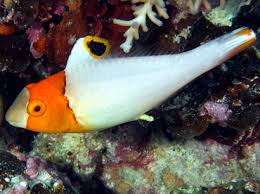
Cetoscarus bicolor
| Identification | Adults are dramatically colored: males have a green body with pink facial markings and a broad pink-red band. Females and juveniles are white with a reddish-brown saddle on the back — strikingly different from adults. |
| Maximum Length | Up to 35 inches (90 cm) |
| Origin | Indo-Pacific — Red Sea to Micronesia |
| Minimum Tank Size | 300+ gallons — open water species |
| Reef Compatible | No — actively feeds on living coral |
Behavior
One of the largest and most spectacular parrotfish. Parrotfish use their fused beak-like teeth to bite off chunks of coral, digest the organic matter, and excrete fine white sand — a major contributor to tropical beach sand. Rarely kept in captivity due to size and dietary needs.
Diet & Feeding
Corallivore. Feeds on living coral, encrusting algae, and other benthic organisms. Extremely difficult to feed in captivity. Live coral and live rock are essential; must transition to algae-based prepared foods very slowly.
Cautions
Expert-only and not practically suited to home aquariums. Best in very large public systems. Will destroy any coral in the tank.