
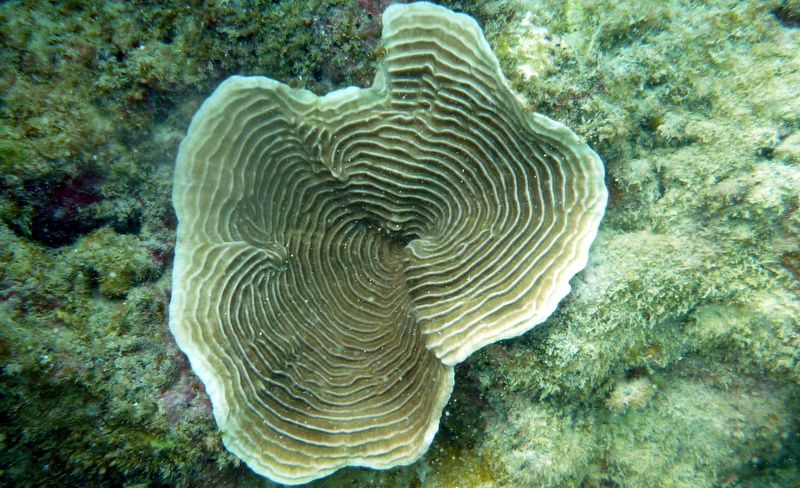
Pachyseris sp.
| Care Level | Easy to moderate |
| Lighting | Low to moderate |
| Water Flow | Moderate |
| Placement | Rock, low to mid tank |
| Aggression | Peaceful |
| Coloration | Brown, grey-green, with fine ridges |
Overview
Pachyseris, the elephant skin or castle coral, grows as plates and folds covered in fine, parallel, meandering ridges that genuinely resemble wrinkled elephant skin. A relative of Pavona and Leptoseris, it is a hardy, low-demand stony coral with an unusual, textural look that stands out among smoother corals, and it is far more forgiving than its SPS classification might suggest.
Care & Placement
Easy to moderate. It does well in low to moderate light and moderate flow, on rock in the low-to-mid tank — notably, it tolerates lower light than most stonies, so it does not need to be up high. Good flow keeps detritus from settling in the fine ridges. It is undemanding and adaptable once settled.
Feeding
Photosynthetic and self-sufficient on light. Its very small polyps take little in the way of food, so feeding is a minor factor; stable water and appropriate light are what it needs.
Propagation
Easy: cut a section of the plate and glue it to a plug or rubble. It plates and encrusts outward from the frag once healed.
Cautions
Peaceful and trouble-free. The main thing to watch is detritus collecting in the fine surface ridges, so provide enough flow to keep it clean, and give its plates room to spread.
Frequently Asked Questions
Why is it called elephant skin coral?
Because its surface is covered in fine, parallel, meandering ridges that look strikingly like the wrinkled skin of an elephant. It is one of the more distinctive-textured corals in the hobby.
Is Pachyseris hard to keep?
No — despite being grouped with SPS, it is one of the more forgiving stony corals. It tolerates low-to-moderate light and moderate flow and is undemanding as long as water is stable and detritus is kept off its ridges.
Where should I place Pachyseris?
On rock in the low-to-mid tank. It tolerates lower light than most stonies, so it does not need a high, bright spot — just give it enough flow to keep the ridged surface clean.