
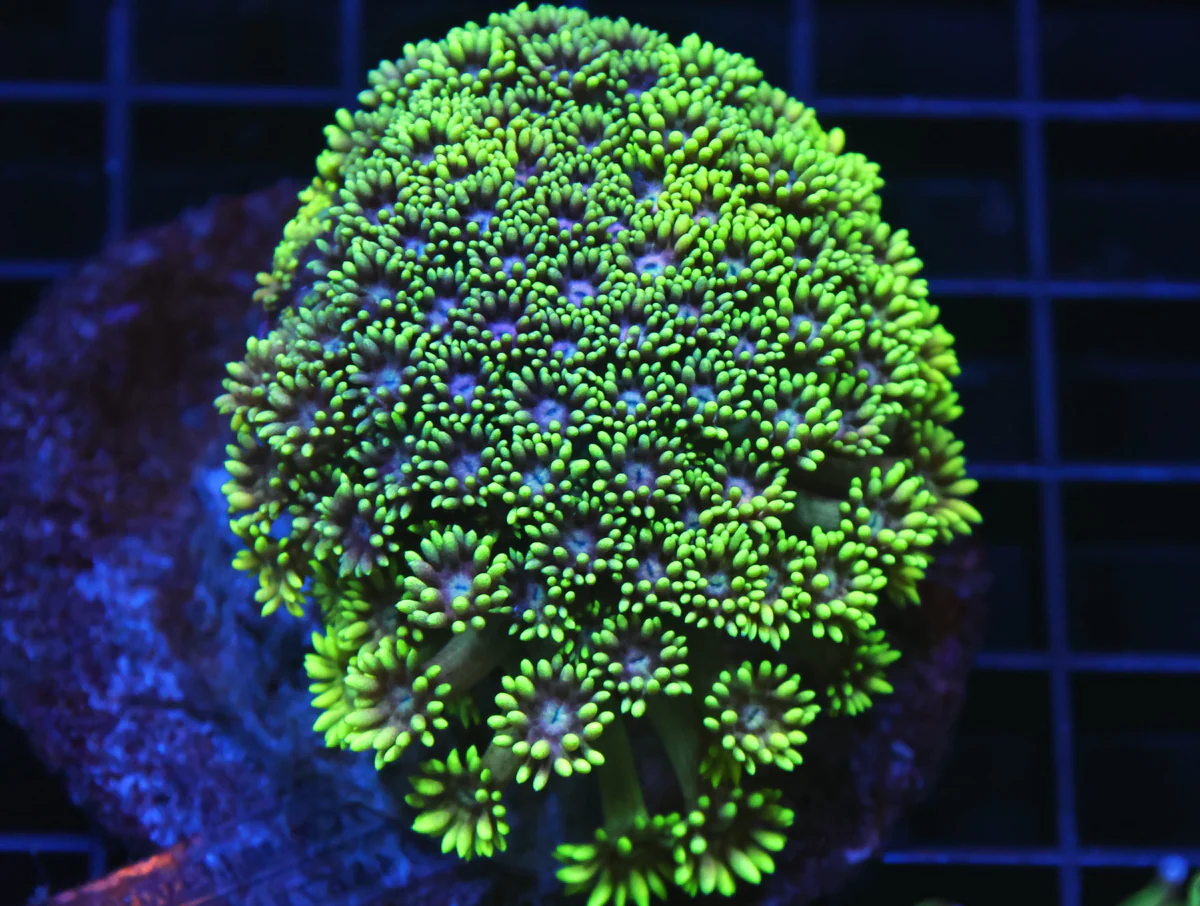
Goniopora sp.
| Care Level | Moderate |
| Lighting | Moderate |
| Water Flow | Low to moderate |
| Placement | Low rock or sand |
| Aggression | Semi-aggressive |
| Coloration | Green, pink, purple, rainbow "flowerpot" polyps |
Color Variations
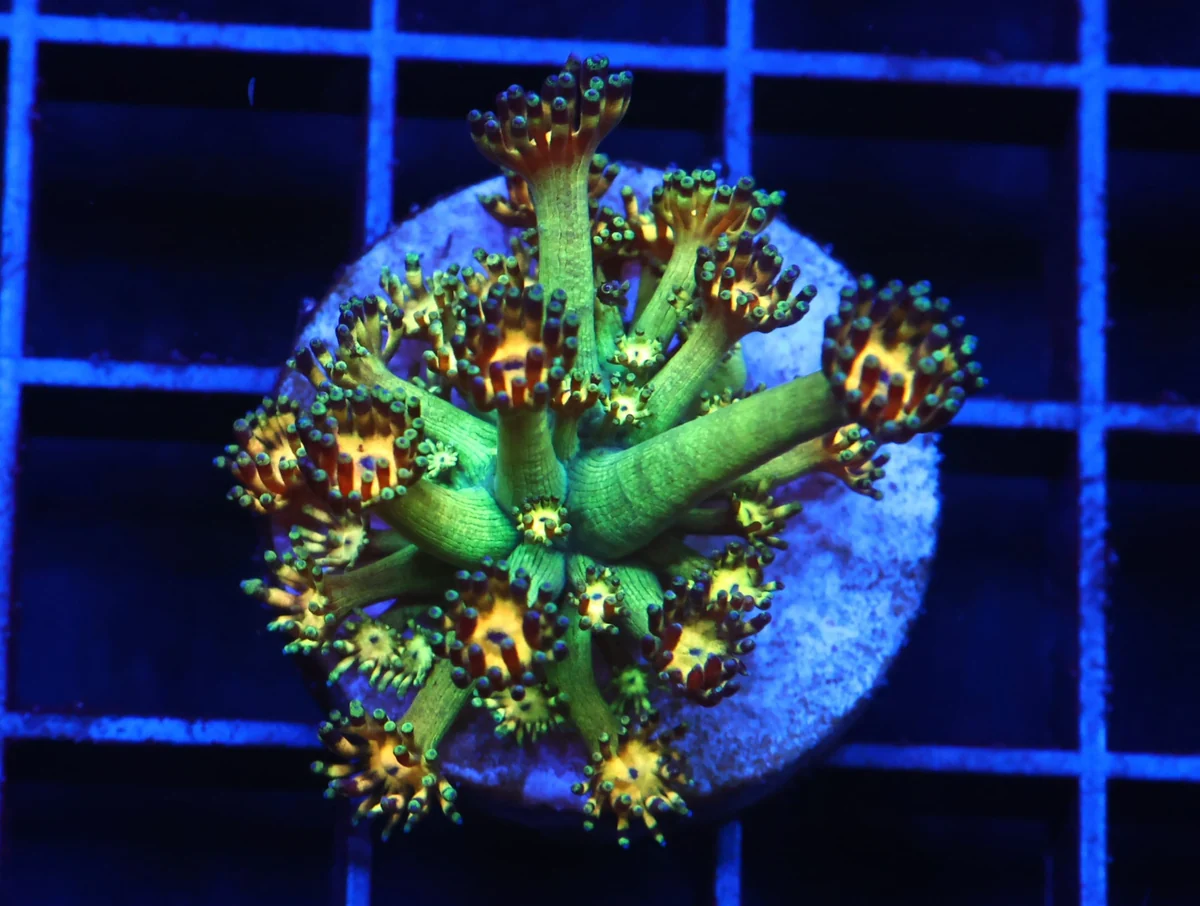
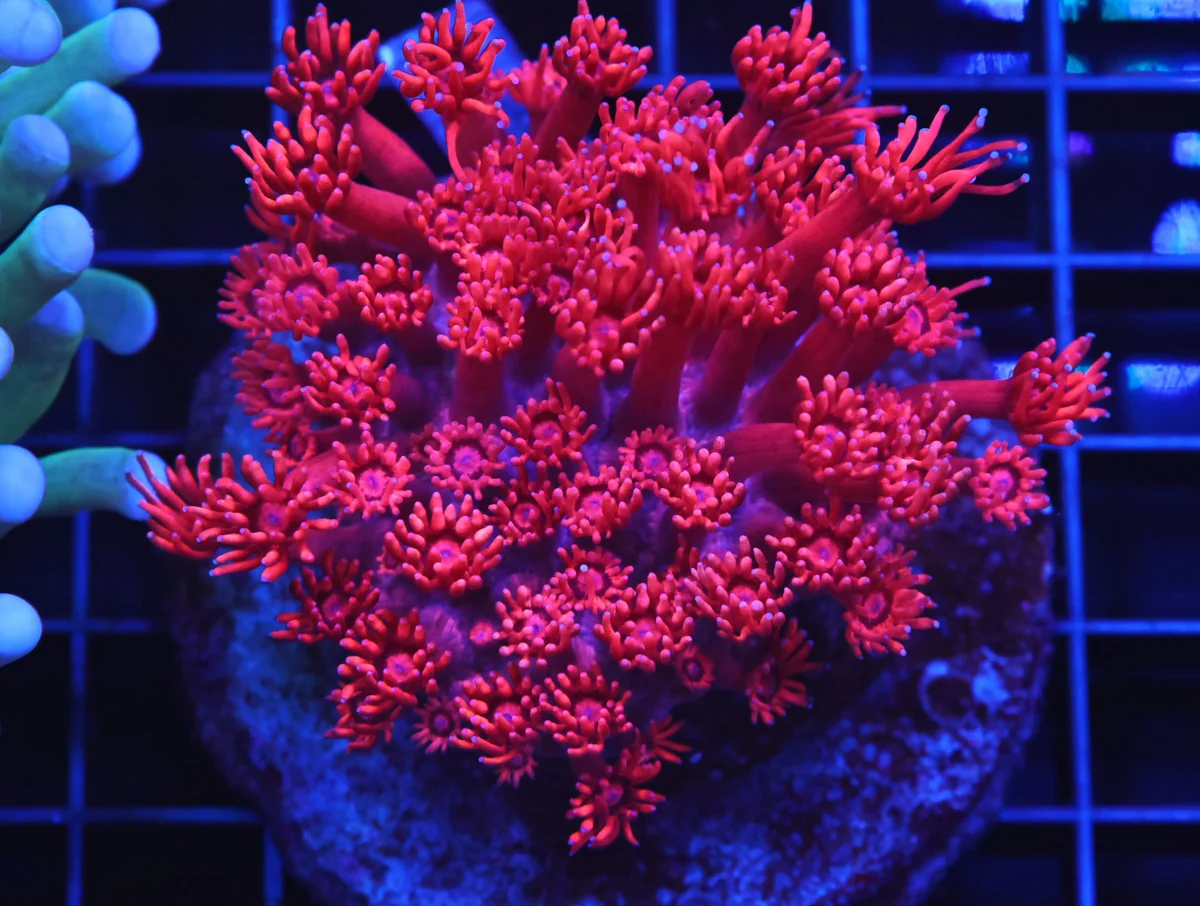
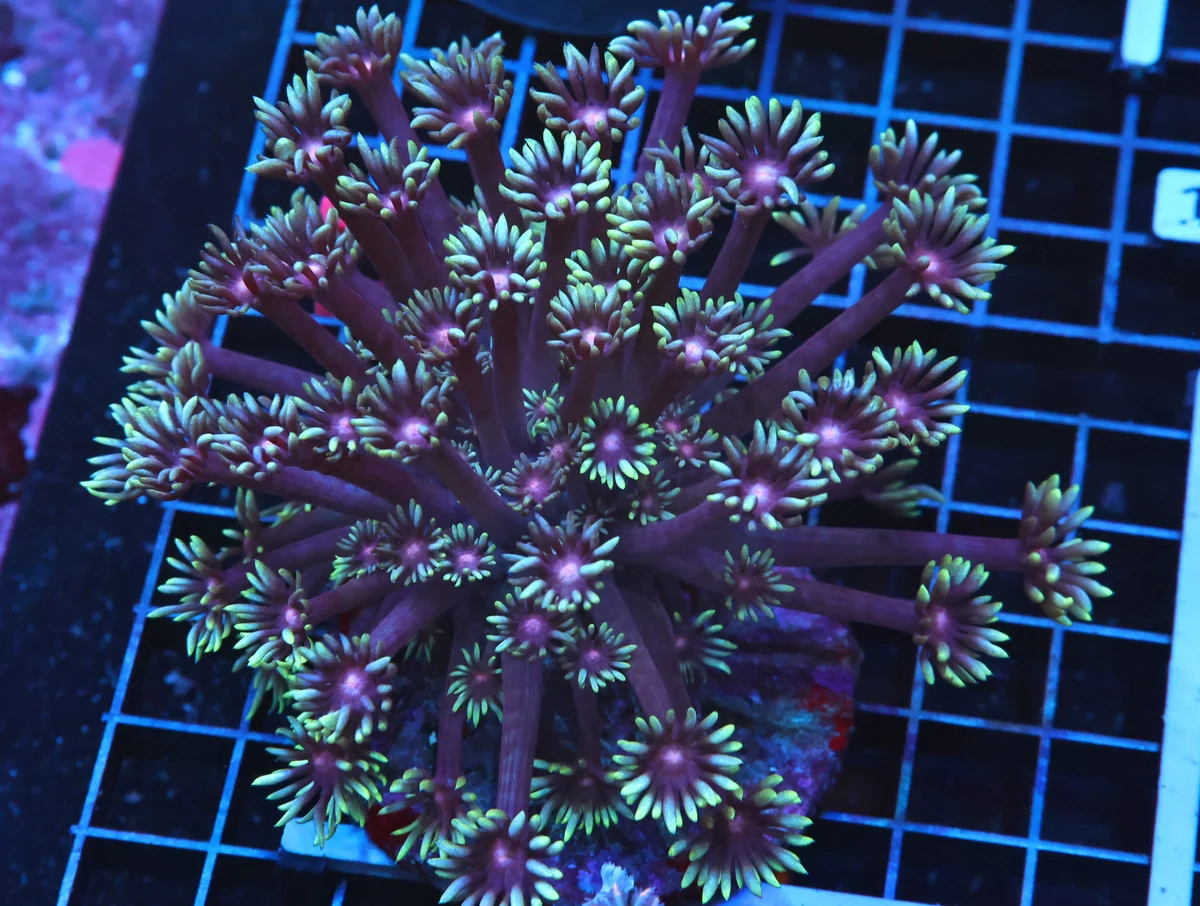
Goniopora is available in several designer color morphs. The coloration is purely cosmetic — every one takes the same care described above.
Overview
Goniopora (the “Flowerpot Coral”) extends a shimmering ball of long, daisy-like polyps that sway constantly in the current — mesmerizing and colorful. Once notoriously hard to keep, modern aquacultured and Australian Gonioporas are far more successful, and they are now a popular, rewarding LPS.
Care & Placement
Give moderate light and low-to-moderate flow. Place low on rock or on the sand. Stability is key — Goniopora dislike swings in parameters. Aquacultured/Australian specimens adapt far better than wild imports; a mature, stable tank helps.
Feeding
Photosynthetic and benefits greatly from feeding — target-feed fine foods (coral foods, phytoplankton, baby brine, amino acids) a couple of times a week to fuel the long polyps.
Propagation
Frag by cutting the encrusting base/skeleton; healthy colonies can be divided by experienced keepers.
Full step-by-step: How to Frag Goniopora and Alveopora
Cautions
Historically difficult — buy aquacultured or Australian specimens, provide a stable mature tank, and feed regularly. Do not confuse with Alveopora (which has 12 tentacles per polyp vs Goniopora’s 24). Extends mild sweepers; give a little space.
Frequently Asked Questions
Is goniopora hard to keep?
It has a difficult reputation, but modern aquacultured flowerpot Goniopora do much better than wild ones. With stable parameters and feeding, they’re achievable for an intermediate keeper.
What light and flow does goniopora need?
Moderate light and low to moderate flow so its long flowing polyps can extend. Stable water chemistry is essential, since it reacts poorly to swings.
Should I feed goniopora?
Yes. It benefits from fine planktonic and small meaty foods. Feeding, stable parameters, and not moving it around are the keys to long-term success.