
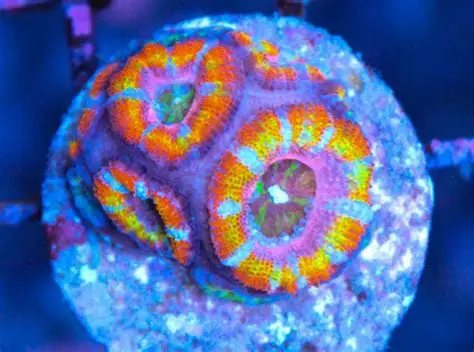
Acanthastrea / Micromussa lordhowensis
| Care Level | Easy to moderate — great beginner LPS |
| Lighting | Low to moderate |
| Water Flow | Low to moderate |
| Placement | Low rock or sand |
| Aggression | Semi-aggressive (short sweepers) |
| Coloration | Every color — rainbow, red, green, orange morphs |
Overview
Acan corals (Acanthastrea, now often Micromussa lordhowensis) are among the most popular LPS in the hobby, forming colonies of fleshy, jewel-like polyps in an incredible range of colors. Hardy and fast-growing, they are a favorite of both beginners and collectors. They come in countless named morphs — “Rainbow,” “Bowser,” “Rainbow Delight” and many more — but all Acans share the same care.
Care & Placement
Give low-to-moderate light and gentle flow; too much of either keeps the fleshy polyps from inflating. Place low in the tank on rock or sand, with a little space from neighbors. Under actinic/blue light their colors fluoresce beautifully.
Feeding
Photosynthetic and a hearty feeder — Acans respond dramatically to feeding. Spot-feed small meaty foods (mysis, coral foods, chopped seafood) once or twice a week, especially in the evening when the feeder tentacles emerge, to speed growth and boost color.
Propagation
Very easy to frag — cut between polyps with a bone cutter or band saw; each polyp with a bit of skeleton grows into a new colony.
Full step-by-step: How to Frag Acans, Favia and Other Rock-Skeleton LPS
Cautions
Extends short sweeper tentacles at night that can sting close neighbors — leave a little space. Otherwise hardy and forgiving. Keep flow gentle so polyps inflate fully.
Frequently Asked Questions
Is acan coral good for beginners?
Yes. Acans (Acanthastrea and Micromussa) are hardy, colorful LPS that do well for newer reefers and are popular for their bright, fleshy polyps.
What light and flow do acans need?
Low to moderate light and low to moderate flow. They often color up best under lower-to-moderate light; too much light can bleach them.
Should I feed acan coral?
Yes. They respond very well to spot-feeding small meaty foods like mysis or pellets a couple of times a week, which boosts growth and color. They extend feeder tentacles at night.