
Overview
Carbon dosing lowers nitrate and phosphate together by feeding beneficial bacteria a carbon source: vodka, vinegar, or solid biopellets. The bacteria multiply, consume nitrate and phosphate as they grow, and are then removed by your skimmer or eaten by corals and filter feeders.
How It Works
Reef water usually has plenty of nitrate and phosphate but little available carbon, which limits bacterial growth. Add a carbon source and bacteria bloom, pulling nitrate and phosphate out of the water to build their cells. Skim the bacteria out, or let corals eat them, and you have exported the nutrients.
The Three Methods
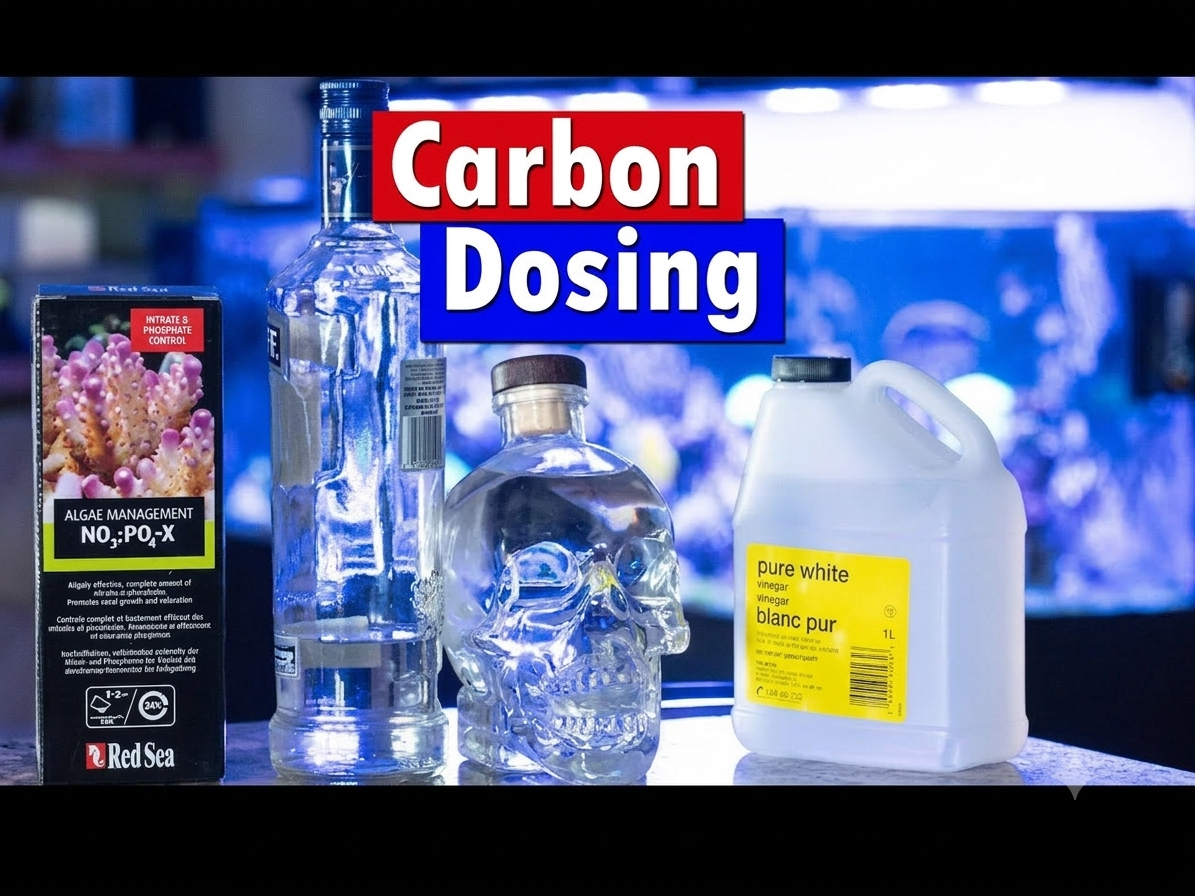
Vodka dosing is cheap and precise: you add a small daily amount and ramp up slowly. Vinegar works the same way but is milder and lowers pH slightly, so it is gentler and harder to overdo. Biopellets are solid polymer beads run in a reactor; water flows over them, bacteria grow on the pellets, and gentle tumbling sloughs them off. Pellets are more set-and-forget but less adjustable.
Why It Helps
It is one of the most effective ways to knock down both nitrate and phosphate at once, especially in tanks where water changes and skimming can’t keep up. Done well, it delivers clean water and vivid coral color.
Cautions
Start low and increase slowly. Overdosing causes a bacterial bloom that clouds the water and can crash oxygen, stressing livestock. A good skimmer is essential to export the bacteria. Carbon dosing can also strip nutrients too far, causing pale corals or dinoflagellates, so aim for low-but-not-zero nitrate and phosphate. Never chase zero.
Frequently Asked Questions
What is carbon dosing?
Adding a carbon source, vodka, vinegar, or biopellets, to feed bacteria that then consume nitrate and phosphate as they grow. The bacteria are exported by your skimmer or eaten by corals, removing the nutrients from the water.
Is vodka or vinegar better for carbon dosing?
Both work the same way. Vodka is more concentrated and precise; vinegar is milder, harder to overdose, and lowers pH slightly. Many beginners prefer vinegar for its forgiveness, while vodka is more efficient by volume.
Is carbon dosing dangerous?
It is safe when you start low and ramp up slowly. The main risk is overdosing, which causes a bacterial bloom that clouds the water and can crash oxygen. A strong protein skimmer and gradual dosing keep it safe.
Do I need a skimmer to carbon dose?
Strongly recommended. The skimmer exports the bacteria you are growing; without good skimming or heavy filter feeding, the bacteria and the nutrients they hold can stay in the system, undermining the whole method.