
Medusa Worm
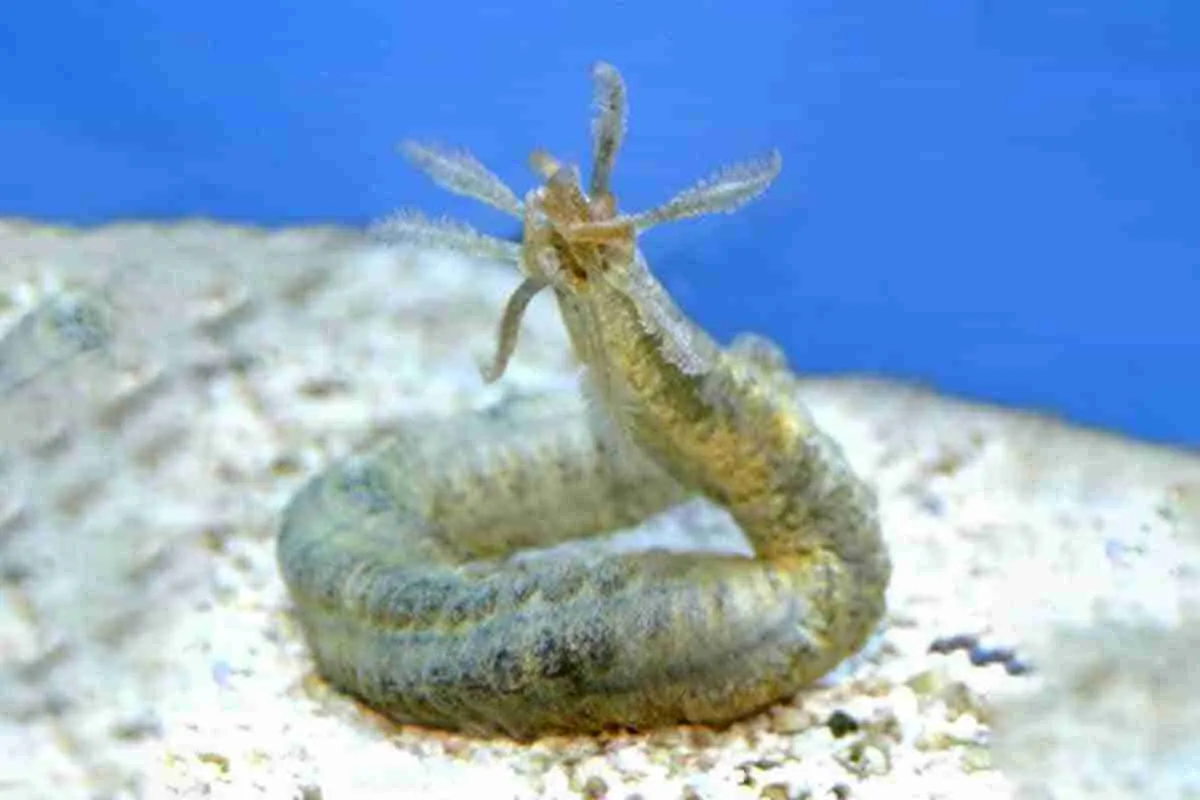
Euapta lappa
Also called the Snake Sea Cucumber or Sticky Sea Cucumber. It is a synaptid sea cucumber, not a worm.
| Identification | A long, soft, worm-like sea cucumber — despite the name it is not a worm at all. The body is brown to grey with fine pale longitudinal stripes and a distinctly sticky surface, tipped with a ring of feathery feeding tentacles. It stretches dramatically as it moves and contracts to a fraction of its extended length. |
|---|---|
| Maximum Length | to about 36″ when fully extended |
| Origin | Western Atlantic and Caribbean |
| Minimum Tank Size | 55 Gal. with mature rock and sand |
| Reef Compatibility | Reef safe |
Behavior
A nocturnal detritivore that spends the day tucked deep in the rockwork and emerges after dark to sweep the sand and rock with its feathery tentacles, mopping up detritus and film. Watching one extend across the aquascape is genuinely impressive — it can stretch several times its resting length. It harms nothing, and it is a superb natural cleaner in a mature system.
Diet & Feeding
Detritivore. It feeds itself by sweeping detritus, film algae and organic matter from the rock and sand, so it needs a mature tank with a real detritus load. In a spotless, newly set-up system it will slowly starve, and supplemental feeding is difficult to do reliably.
Cautions
The body wall is fragile and extremely sticky, and a torn cucumber is a serious problem — like other sea cucumbers it can foul a tank badly if it dies unnoticed. Screen every powerhead and pump intake, because a wandering synaptid drawn into an impeller is the usual way this goes wrong. Do not pull it off the rock; its adhesive skin tears easily. And be honest about the tank: it needs an established system with enough detritus to sustain it.