
| What It Is | Establishing the biological filter |
| How Long | 2–6 weeks, typically |
| You’re Waiting For | Ammonia & nitrite to read zero |
| Difficulty | Easy — mostly patience |
| Key Tools | Test kit, ammonia source, live rock |
Overview
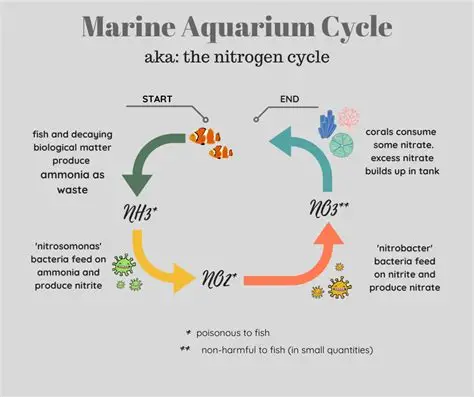
Cycling is the single most important step in starting a reef tank, and the one most new hobbyists rush. “The cycle” is really the growth of beneficial bacteria that convert toxic fish waste (ammonia) into nitrite (also toxic) and finally into far less harmful nitrate. Until those bacteria colonies are established, anything you add will be poisoned by its own waste. There are no shortcuts that beat simply waiting and testing.
How the Nitrogen Cycle Works
Ammonia appears first (from fish waste, uneaten food, or a dosed ammonia source). One group of bacteria eats ammonia and produces nitrite. A second group eats nitrite and produces nitrate. When both ammonia and nitrite read zero and you see some nitrate, the biological filter is working and the tank is “cycled.” That handoff is why you can’t declare victory just because ammonia dropped — nitrite has to fall to zero too.
Step-by-Step
- n
- Set up the tank with saltwater at the right salinity, heater and flow running.
- Add a source of live rock and/or live sand (seeds the bacteria) and a source of ammonia — a small piece of raw shrimp, or bottled ammonia dosed to about 2 ppm.
- Test ammonia, nitrite, and nitrate every few days. Watch ammonia rise then fall, nitrite rise then fall, and nitrate appear.
- When ammonia AND nitrite both hold at zero after you add ammonia, do a water change to knock down accumulated nitrate.
- Add your first hardy fish or cleanup crew slowly — one or two at a time so the bacteria can scale up.
n
n
n
n
n
Tips to Cycle Faster
Seeding with live rock, live sand, or filter media from an established tank is the biggest accelerator — you’re transplanting the bacteria rather than waiting for them to arrive. Bottled nitrifying bacteria products help too. Keep the tank warm (about 78–80°F) and the lights low during cycling; you don’t need light for bacteria, and low light avoids an early algae bloom.
Common Mistakes
Adding fish on day one: the classic killer — there’s no filter yet. Chasing the cycle with water changes: big changes mid-cycle just remove the ammonia the bacteria need to grow, stalling it. Trusting “instant cycle” claims blindly: bottled bacteria help but still verify with test results before stocking.