
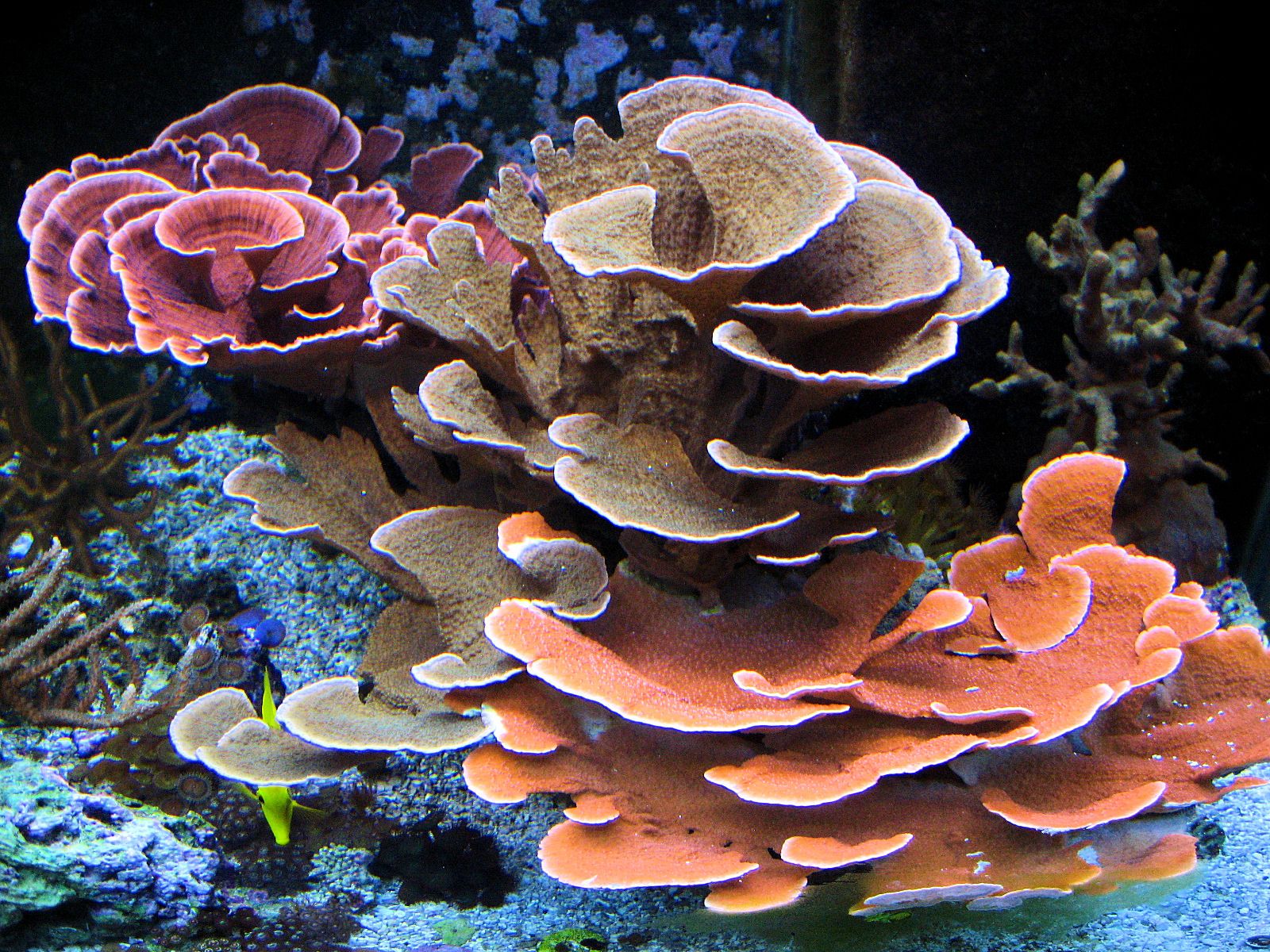
| Difficulty | Easy |
| Time Required | 10–20 minutes |
| Healing Time | 1–2 weeks |
| Best Method | Snap plates like a cracker |
| Coral Type | Small-polyp stony (SPS) |
Overview
Plating Montipora (like the classic Monti cap) frags with your fingers: the thin plates snap cleanly like a cracker, and every piece with living tissue will grow. Encrusting Montis need a chisel or screwdriver to pop a crusted chip of rock free. Either way this is the perfect first SPS to frag — forgiving, fast-growing, and cheap to replace if you fumble.
What You’ll Need
- Clean hands or bone cutters (plating), small chisel or flat screwdriver (encrusting)
- Frag plugs or discs and gel super glue
- Coral dip — Montipora-eating nudibranchs are a real pest; always dip both directions (new frags in, and inspect anything leaving)
Step-by-Step
- For plates: grip the plate edge and snap off a piece an inch or so across, or score and snap with cutters for a straighter line.
- For encrusting types: work a chisel under the crust edge and pop off a chip with tissue on it.
- Dip thoroughly and inspect the underside for nudibranchs and their egg spirals (tiny white coils).
- Glue the piece flat onto a plug or disc — plating Montis mounted flat re-plate upward in a natural shape.
- Return to bright light and good flow.
Aftercare & Healing
Montipora encrusts its cut edges quickly — within a week or two you should see the rim of new growth (often a lighter growth margin). Full plates re-form within months. If the parent colony shaded itself or grew into a neighbor, fragging the overgrown edge is also routine pruning.
What Can Go Wrong
White patches spreading polyp-by-polyp: Montipora-eating nudibranchs — inspect at night, dip repeatedly, and remove egg coils by hand. They are the number one reason to quarantine Monti frags. Bleached frag after mounting: too much light too fast if it moved up the tank; drop it lower and re-acclimate.