
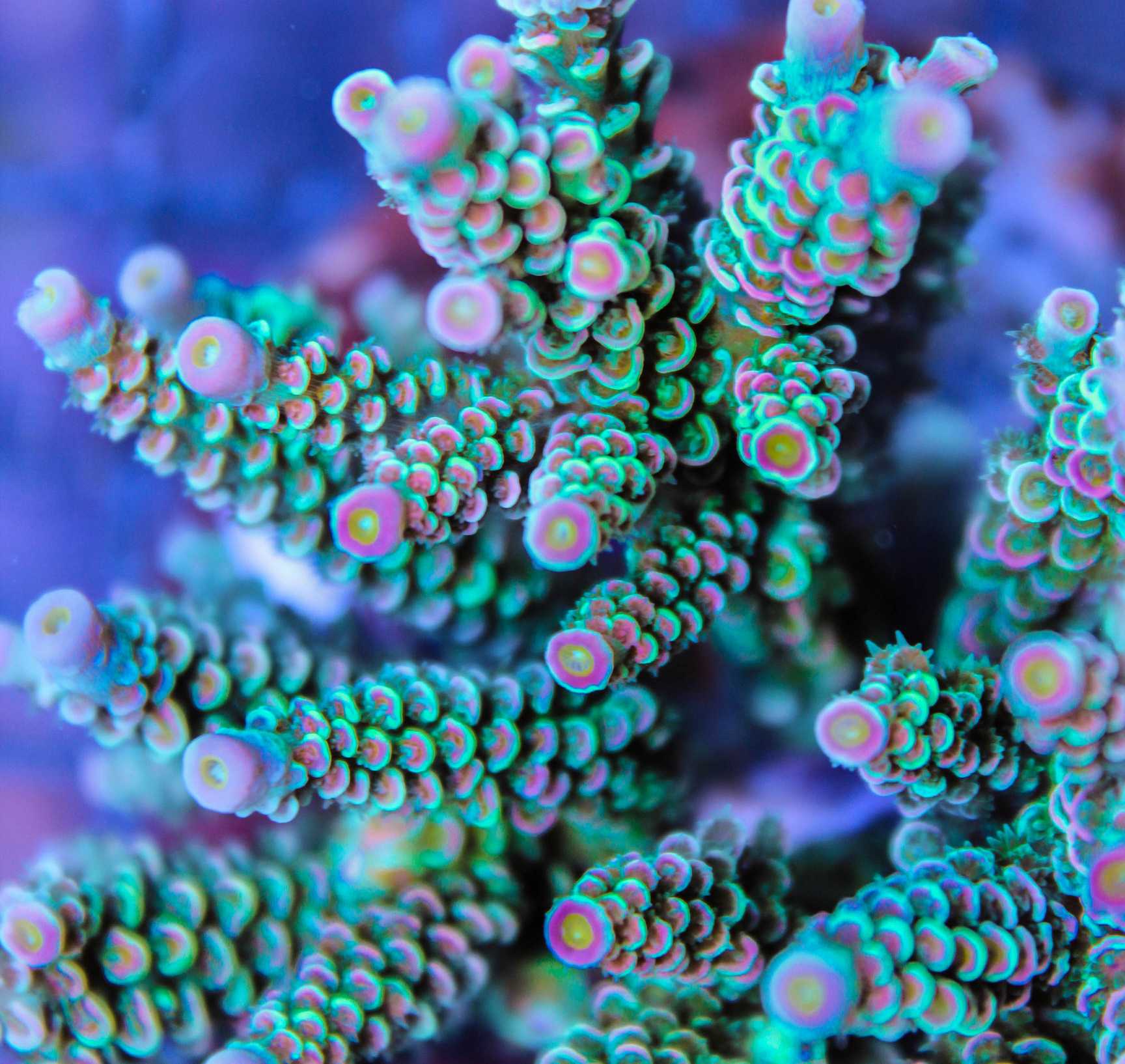
| Applies To | All corals |
| Difficulty | Read this first |
| Core Tools | Cutters, glue, plugs, dip, gloves |
| Typical Healing | 1–4 weeks depending on coral |
| Best Time | Healthy, established, growing colonies only |
Overview
Fragging — cutting a piece of a coral so it grows into a new colony — is how the hobby propagates corals without touching wild reefs. Done right it is low-risk: corals fragment naturally on the reef all the time, and most species heal within weeks. This guide covers the universal toolkit, safety rules, and healing principles; the rest of our fragging series covers the exact method for each coral type, because a mushroom and an Acropora could hardly be more different to cut.
The golden rule: only frag a coral that is healthy, growing, and established in your tank for months. Fragging a stressed coral multiplies the stress, and a struggling colony often dies on both sides of the cut.
What You’ll Need
- Bone cutters or coral cutters — the workhorse for branching corals
- Sharp scalpel or razor — for soft corals and mats
- Frag plugs, discs or rubble — something for the new frag to live on
- Cyanoacrylate gel glue (reef-safe super glue gel) and/or 2-part epoxy
- Coral dip (and an iodine-based dip like Lugol’s for fresh cuts)
- Nitrile gloves and safety glasses — non-negotiable with zoas/palys, smart with everything
- A small container of tank water to work over, and paper towels you will throw away
Step-by-Step
- Prepare everything before you touch the coral: plugs, glue open, dip mixed, workspace lit.
- Work fast and keep the coral wet. Most corals tolerate a few minutes of air exposure; none enjoy it.
- Make one clean, decisive cut rather than repeated crushing cuts — clean edges heal fastest.
- Dip the new frag (and ideally rinse the parent) before anything goes back in the tank.
- Dry the attachment point with a quick dab, apply gel glue, press the frag on for 20–30 seconds.
- Place the frag in similar light and flow to where the parent lived — not blasting flow, not shade.
Aftercare & Healing
Expect the parent and frag to sulk for a few days — retracted polyps, extra slime. Keep water quality stable and resist the urge to move the frag around; corals heal fastest when left alone. Feeding the tank lightly during the healing window helps LPS and soft corals rebuild tissue. Most soft corals re-attach and open within a week; stony corals typically encrust over their cut edge within two to four weeks.
What Can Go Wrong
Frag detaches: the glue bond failed on wet or slimy tissue — dry the contact point better and use gel, not liquid glue. Tissue recession from the cut: usually water quality or an unhealthy parent; dose iodine dip and stabilize. Brown jelly (LPS): remove the coral, siphon the jelly off outside the tank, iodine dip, return to good flow — and act fast, it spreads. Everything melts: you fragged a stressed coral; wait months longer next time.