
Blue Blubber Jellyfish
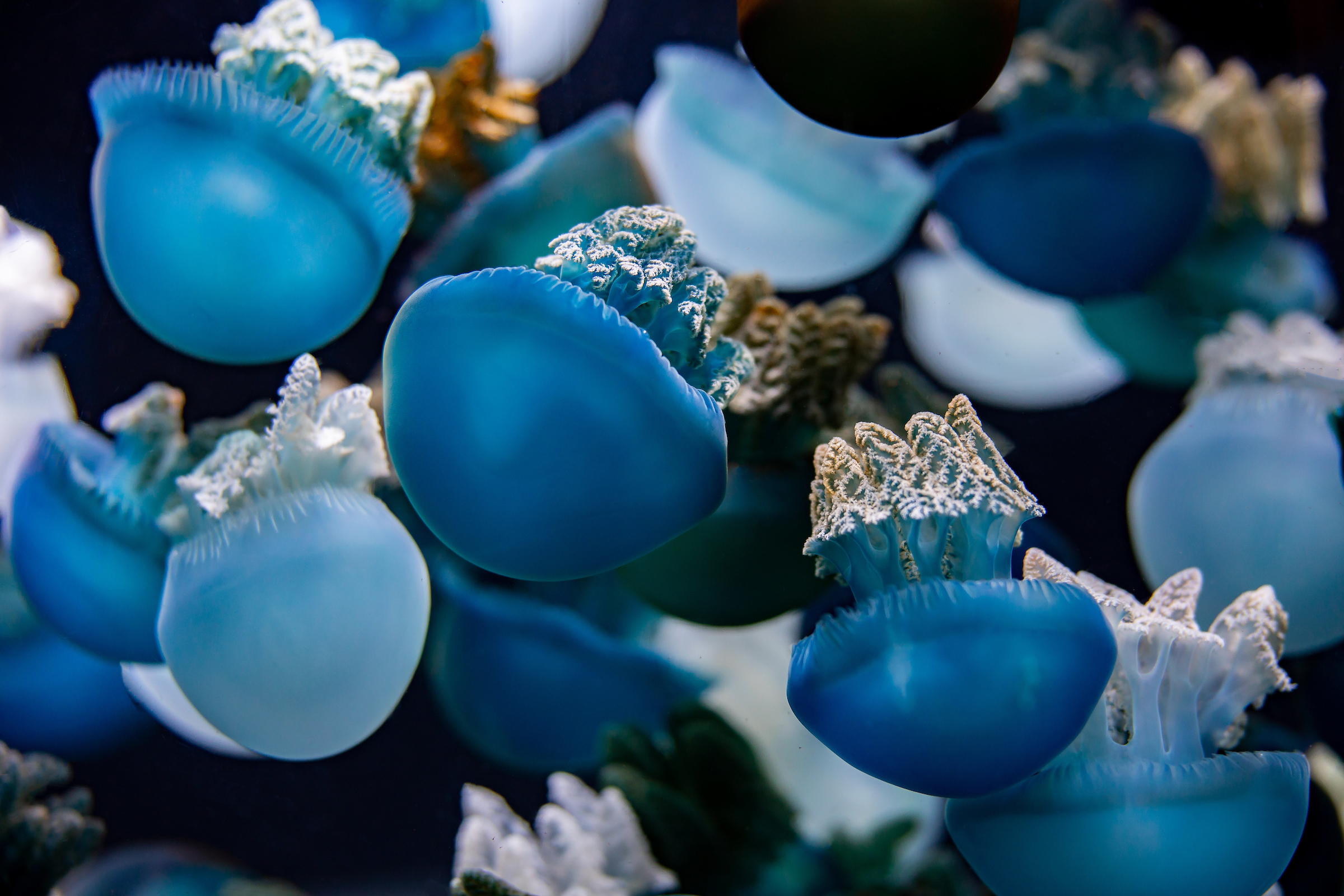
Photo: Wikimedia Commons (CC BY-SA 3.0)
Catostylus mosaicus
| Identification | Compact, dome-shaped bell with no trailing tentacles — just eight thick, branching oral arms hanging below. Color morphs vary dramatically by region: vivid blue and deep purple are the most prized aquarium forms; brown, white, and cream morphs also occur. The smooth, rounded bell is the defining shape that gives this species its common name. |
| Maximum Length | Bell diameter up to 12 inches (30 cm); typical aquarium specimens 4–6 inches |
| Origin | Indo-Pacific — Australia, Papua New Guinea, the Philippines, and Southeast Asia; found in estuaries, bays, and coastal waters |
| Minimum Tank Size | Kreisel or flow-through jellyfish tank — minimum 10-gallon kreisel |
| Reef Compatibility | No — requires a dedicated jellyfish kreisel tank |
Behavior
The Blue Blubber Jellyfish is one of the most popular and widely available jellyfish species for home aquariums, prized for its vivid blue and purple color morphs and its relatively manageable size and care requirements. Like all jellyfish, it requires a kreisel tank — a circular or cylindrical aquarium that creates a gentle, rotating current to keep the animal suspended without trapping it against walls or intakes. Unlike the Pacific Sea Nettle, it has no long trailing tentacles, making it easier and safer to maintain. Blue Blubbers are social and do well in groups. They are among the hardier jellyfish species available to home hobbyists and tolerate a reasonable range of water parameters. The electric blue morphs are particularly stunning under blue LED or actinic lighting.
Diet & Feeding
Unlike most jellyfish, the Blue Blubber is not primarily a tentacle-based predator — it captures food using mucus on its oral arms and bell surface. Feed baby brine shrimp (Artemia nauplii), rotifers, phytoplankton, and commercially prepared jellyfish foods once or twice daily. The lack of long stinging tentacles means food must be introduced in a way that contacts the oral arms and bell — broadcast feeding into the kreisel current works well. A well-fed Blue Blubber will visibly expand and maintain good bell tone.
Cautions
Requires a kreisel tank — will not survive in a standard rectangular aquarium. Sensitive to rapid changes in temperature, salinity, and water quality. Do not mix with fish, other invertebrates, or tentacled jellyfish species. Mild sting — generally not harmful to humans but avoid direct contact. Source from reputable jellyfish-specialist suppliers to ensure healthy, tank-raised specimens.